

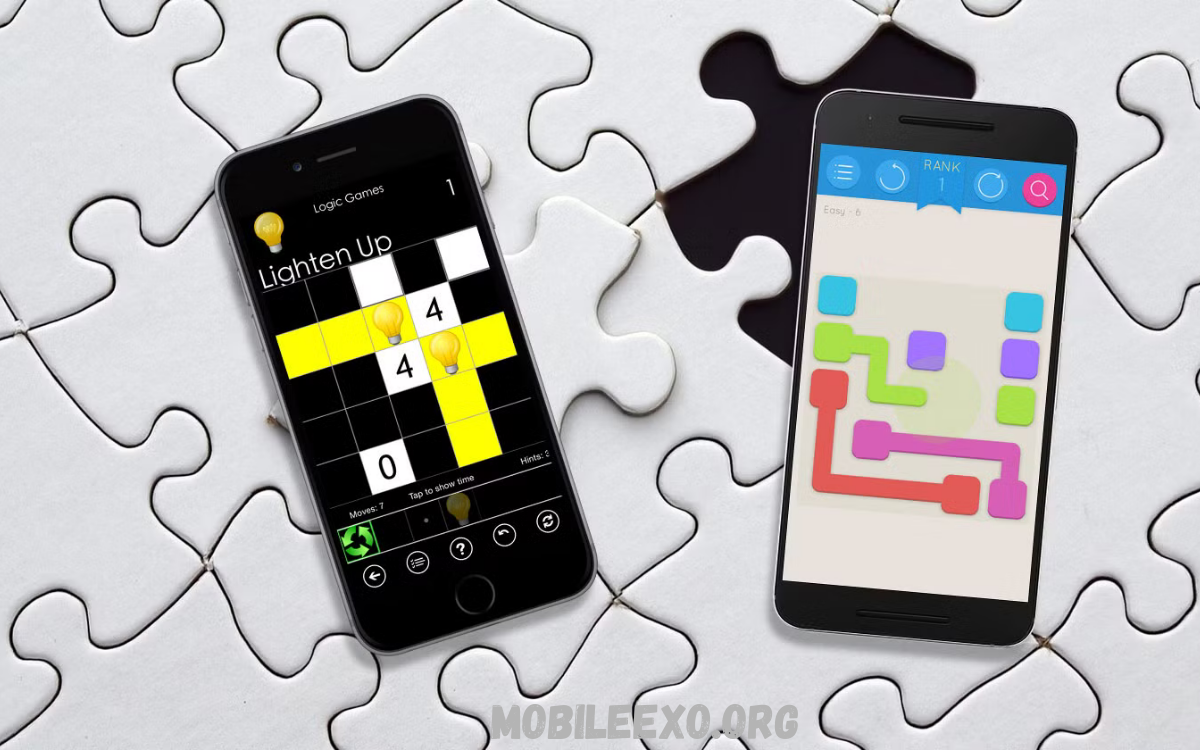
Puzzle mobile games represent one of the most stable and profitable segments within the global mobile gaming industry. Unlike action-heavy or competitive genres, puzzle mobile games focus on logic, pattern recognition, spatial reasoning, and problem-solving mechanics.
The widespread adoption of smartphones has transformed puzzle mobile games into daily companions rather than occasional entertainment products. Short session design, intuitive interfaces, and scalable difficulty allow puzzle mobile games to integrate seamlessly into modern lifestyles.
Evolution Of Puzzle Mobile Games
Puzzle games existed long before mobile platforms, appearing in board games, newspapers, and early computer software. Sudoku, crosswords, sliding tile puzzles, and logic grids established foundational mechanics that later transitioned into digital formats.
The emergence of smartphones introduced touch interfaces, accelerometers, and always-connected ecosystems. These innovations reshaped puzzle game interaction models. Early mobile puzzle titles focused on simplicity, low hardware requirements, and intuitive controls.
Market Size And Industry Significance
Puzzle mobile games consistently rank among the highest-grossing mobile game categories worldwide. Market analysis shows sustained growth driven by broad accessibility and high player retention rates. Unlike genres dependent on competitive reflexes, puzzle mobile games attract long-term engagement across age groups and skill levels.
Advertisers favor puzzle mobile games due to predictable user behavior patterns and extended session lifespans. Publishers benefit from lower development costs compared to 3D action titles while achieving comparable revenue through scale and longevity.
Core Design Principles
Successful puzzle mobile games share several foundational design principles:
Simplicity With Depth
Initial gameplay must remain intuitive. Players should understand core mechanics within seconds. Depth emerges gradually through level complexity, rule variations, and layered objectives.
Progressive Difficulty
Balanced progression prevents early frustration while maintaining long-term challenge. Puzzle mobile games typically introduce new mechanics incrementally, reinforcing mastery before escalation.
Feedback And Reward Systems
Visual cues, sound effects, animations, and score indicators provide immediate feedback. Reward loops, including stars, unlockables, or narrative advancement, reinforce player motivation.
Session Flexibility
Puzzle mobile games accommodate both short play sessions and extended engagement. Save states, level-based structures, and minimal penalties for interruption support flexible usage patterns.
Categories Within Puzzle Mobile Games
Puzzle mobile games encompass multiple subgenres, each targeting specific cognitive and emotional preferences:
- Match-three and tile-based puzzles
- Logic and deduction puzzles
- Physics-based puzzles
- Word and language puzzles
- Spatial and visual perception puzzles
- Narrative-driven puzzle adventures
- Minimalist abstract puzzles
This diversity enables continuous market expansion without oversaturation.
Cognitive And Psychological Benefits
Research consistently associates puzzle mobile games with positive cognitive outcomes. Regular engagement supports mental agility, memory retention, pattern recognition, and problem-solving efficiency.
Puzzle mobile games encourage focused attention without overwhelming stimulation. This balance promotes relaxation while maintaining mental engagement. Many players report reduced stress levels after gameplay sessions, particularly when puzzles emphasize calm pacing and aesthetic harmony.
Monetization Models
Puzzle mobile games employ varied monetization strategies aligned with user expectations:
Free-To-Play With In-App Purchases
This dominant model provides free access while offering optional purchases for hints, boosters, cosmetic enhancements, or time accelerators.
Advertising-Supported Gameplay
Rewarded ads allow players to earn benefits without financial commitment. This model balances revenue generation with user autonomy.
Premium Purchase Model
Some puzzle mobile games adopt one-time purchase pricing, emphasizing high production quality, ad-free experiences, and complete content access.
Subscription Services
Subscription access provides rotating puzzle libraries, exclusive levels, and continuous updates.
Successful monetization depends on fairness perception. Puzzle mobile games that respect player agency achieve stronger retention and brand loyalty.
Read Also: Best Mobile Games 2026 – Definitive Professional Guide Covering Top Android, iOS Titles
User Engagement And Retention Strategies
Long-term success requires sustained engagement beyond initial download. Effective strategies include:
- Daily challenges
- Seasonal events
- Limited-time puzzles
- Leaderboards and social comparison
- Cloud saves and cross-device synchronization
- Personalized difficulty adaptation
Live operations teams play an essential role in maintaining relevance. Content cadence, player feedback analysis, and community communication support continuous engagement.
Visual And Audio Design
Visual clarity remains essential for puzzle mobile games. Overly complex visuals can obscure logic comprehension. Clean interfaces, consistent iconography, and contrast optimization enhance usability.
Audio design reinforces immersion without distraction. Subtle sound effects, ambient music, and adaptive audio feedback contribute to emotional resonance while preserving cognitive focus.
Accessibility considerations, including colorblind modes and adjustable text sizes, expand audience reach.
Technology And Innovation
Emerging technologies continue reshaping puzzle mobile games:
- Artificial intelligence supports adaptive difficulty and procedural puzzle generation
- Machine learning enables personalized gameplay pathways
- Augmented reality introduces physical-space puzzle integration
- Cloud computing supports large-scale content delivery
- Haptic feedback enhances tactile interaction
These innovations enable deeper personalization while preserving accessibility.
Cultural And Social Impact
Puzzle mobile games transcend cultural boundaries due to universal logic principles. Localization efforts focus primarily on language adaptation rather than gameplay restructuring.
Social sharing features amplify organic marketing. Players frequently share achievements, puzzle solutions, or daily challenges across digital platforms. This behavior contributes to sustained visibility without excessive advertising expenditure.
Puzzle mobile games also foster intergenerational interaction, allowing shared experiences between age groups.
Challenges Facing The Genre
Despite success, puzzle mobile games face several challenges:
- Market saturation
- Discovery competition within app stores
- User fatigue from repetitive mechanics
- Balancing monetization with fairness perception
Developers must innovate responsibly, emphasizing originality and player trust rather than exploitative mechanics.
Future Outlook
The future of puzzle mobile games remains strong. Continued smartphone adoption, expanding casual gaming demographics, and increasing interest in cognitive wellness support long-term growth.
Expected trends include:
- Greater narrative integration
- Hybrid puzzle-strategy mechanics
- Educational partnerships
- Wellness-oriented puzzle experiences
- Ethical monetization frameworks
Puzzle mobile games will continue evolving as both entertainment products and cognitive tools.
Frequently Asked Questions
What are puzzle mobile games?
Puzzle mobile games are digital games designed for smartphones and tablets that focus on problem-solving, logic, pattern recognition, or strategy rather than reflex-based action.
Are puzzle mobile games suitable for all ages?
Yes. Many puzzle mobile games feature simple mechanics accessible to children while offering complex challenges for adults, making them suitable for a broad audience.
What types of puzzle mobile games exist?
Common categories include match-3 puzzles, word and language games, logic and deduction puzzles, physics-based puzzles, spatial reasoning puzzles, and narrative-driven puzzle adventures.
Can puzzle mobile games improve cognitive skills?
Yes. Regular play can enhance memory, problem-solving ability, attention span, pattern recognition, and strategic thinking. Some studies suggest mental health benefits, such as stress reduction.
Are puzzle mobile games free to play?
Many puzzle mobile games are free with optional in-app purchases or ads. Others use premium pricing or subscription models to provide ad-free and complete experiences.
Conclusion
Puzzle mobile games represent a cornerstone of the mobile gaming ecosystem. Their enduring popularity stems from accessibility, cognitive engagement, design flexibility, and cross-demographic appeal. From casual daily puzzles to complex logic challenges, puzzle mobile games deliver meaningful experiences within compact digital formats.
As technology advances and player expectations evolve, puzzle mobile games will remain relevant by embracing innovation while preserving core design principles. Developers, publishers, and users alike benefit from a genre that combines intellectual stimulation, relaxation, and sustainable market performance.
