

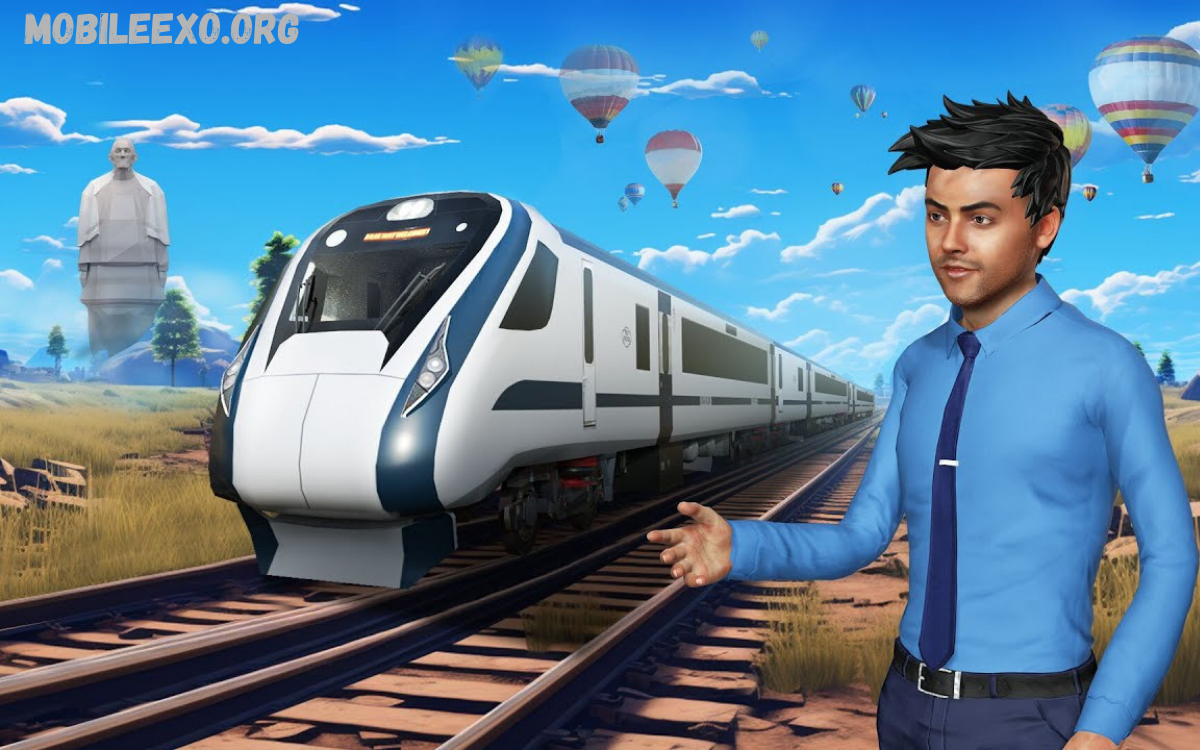
Train Simulator Mobile is a simulation game genre designed to replicate the experience of operating trains on real-world and fictional rail networks on smartphones and tablets. These games focus on realism, control mechanics, and immersive environments, allowing players to take on the role of a train operator responsible for transporting passengers or cargo across various routes.
Modern Train Simulator Mobile titles often feature detailed 3D graphics, dynamic weather conditions, and day-night cycles that enhance realism. Many versions include a wide selection of locomotives, ranging from historic steam engines to modern high-speed trains. Career modes, missions, and free-roam options provide different gameplay experiences, catering to both casual players and simulation enthusiasts.
Core Concept of Train Simulator Mobile Gameplay
Train Simulator Mobile gameplay is built around realistic train operation mechanics. Players assume the role of a train driver responsible for navigating tracks, following schedules, and maintaining safe travel conditions. The core loop includes acceleration control, braking precision, and signal compliance.
Each mission typically requires completing routes within defined time constraints while ensuring passenger comfort and cargo safety. Failure to follow signals or speed regulations often results in penalties, reinforcing disciplined gameplay behavior similar to real railway systems.
The design encourages structured thinking and situational awareness. Players must continuously monitor track conditions, upcoming stations, and environmental changes. This creates a simulation experience that emphasizes planning and execution rather than fast-paced action.
Realism and Simulation Features
Modern Train Simulator Mobile titles focus heavily on realism. Developers integrate physics-based train movement systems that simulate weight, momentum, braking distance, and acceleration curves. These elements ensure that each locomotive behaves differently depending on its type and load.
Environmental systems also contribute to realism. Weather conditions such as rain, fog, and snow impact visibility and traction. Day-and-night cycles further enhance immersion by altering lighting conditions and requiring adaptive driving strategies.
Audio design plays an important role as well. Engine sounds, track noise, station announcements, and ambient effects create a layered sensory experience. Taken together, these features create a convincing simulation environment that mirrors real-world rail operations.
Train Types and Customization Options
Train Simulator Mobile games typically include a wide range of locomotives. These may include steam engines, diesel locomotives, and modern electric high-speed trains. Each type features unique performance characteristics such as speed limits, braking systems, and handling dynamics.
Customization options allow players to modify trains visually and functionally. Skins, liveries, and interior adjustments provide personalization opportunities. Some advanced systems also allow upgrades to engine power, braking efficiency, and passenger capacity.
This variety increases replay value by encouraging experimentation with different train types. Players can experience both historical rail systems and modern transport networks within a single application, deepening gameplay engagement.
Route Design and Environmental Layout
Route design in Train Simulator Mobile focuses on recreating realistic railway networks. Tracks often pass through urban cities, rural landscapes, tunnels, bridges, and mountainous regions. Each route introduces unique challenges such as sharp curves, elevation changes, and station density.
Environmental detail is essential for immersion. Developers include scenery elements such as buildings, vegetation, bodies of water, and infrastructure. These components help simulate real-world geography and create a believable transportation ecosystem.
Route complexity increases gradually, allowing players to adapt to different driving conditions. Early stages may feature simple tracks, while advanced levels introduce multi-line networks and high-traffic rail systems requiring precise coordination.
READ ALSO: City Building Simulator – Ultimate Guide to Virtual Urban Planning Games
Controls and User Interface Systems
Control systems in Train Simulator Mobile are designed for touchscreen devices. Players typically interact with throttle sliders, brake controls, horn systems, and camera angles. Some games include automated assistance modes for beginners, while advanced modes require manual precision.
User interface design prioritizes clarity and accessibility. Speedometers, route maps, signal indicators, and timing displays are positioned to support real-time decision-making. Efficient UI design reduces cognitive load while maintaining simulation depth.
Camera perspectives vary between cockpit view, external view, and cinematic angles. Each perspective serves a different purpose, such as precision control or visual enjoyment of train movement through landscapes.
Missions, Challenges, and Career Modes
Train Simulator Mobile includes structured missions that guide player progression. These missions often involve transporting passengers between stations, delivering cargo within deadlines, or navigating complex track systems.
Career modes provide long-term progression systems. Players earn rewards, unlock new trains, and access more difficult routes as they advance. This progression model maintains engagement and introduces increasing levels of complexity.
Challenge modes may include time trials, emergency scenarios, or weather-affected journeys. These challenges test player adaptability and reinforce mastery of train control systems under varying conditions.
Graphics, Sound, and Immersion Quality
Graphics quality in Train Simulator Mobile has improved significantly with modern mobile hardware. High-resolution textures, realistic lighting, and detailed environments contribute to immersive gameplay experiences. Train models are often designed with precision to reflect real-world counterparts.
Sound design enhances immersion by replicating authentic train audio environments. Engine rumble, horn signals, rail contact sounds, and environmental noise all contribute to realism. These auditory elements are synchronized with gameplay actions for a cohesive experience.
Immersion is further strengthened through dynamic environmental changes. Weather transitions, lighting shifts, and animated passengers create a living simulation world that responds to gameplay progression.
Educational and Cognitive Benefits
Train Simulator Mobile provides educational value beyond entertainment. Players develop improved situational awareness, time management skills, and operational discipline. Understanding railway signaling systems and route planning enhances logical thinking.
The simulation also encourages patience and attention to detail. Unlike fast-action games, train simulators require steady control and predictive decision-making. This promotes cognitive development related to focus and structured problem-solving.
Additionally, players gain indirect knowledge of railway systems and transportation logistics. This exposure can be beneficial for individuals interested in engineering, transportation planning, or simulation-based learning environments.
Future Development of Train Simulator Mobile
The future of Train Simulator Mobile is closely tied to advancements in mobile processing power and simulation technology. Developers are increasingly integrating artificial intelligence systems to create adaptive traffic patterns and dynamic passenger behavior.
Augmented reality and cloud-based simulation may further enhance realism by enabling shared environments and expanded route systems. These innovations could allow more complex railway networks and real-time global simulation experiences.
As technology evolves, Train Simulator Mobile is expected to become more immersive, with higher fidelity physics, expanded customization, and deeper integration of real-world railway data. This progression will continue to attract both casual players and dedicated simulation enthusiasts.
Frequently Asked Questions
What is Train Simulator Mobile?
Train Simulator Mobile is a simulation game genre that allows players to operate virtual trains on smartphones. It focuses on realistic train control, route navigation, passenger transport, and cargo delivery within structured railway environments.
Is Train Simulator Mobile realistic?
Train Simulator Mobile is designed to provide a realistic experience through physics-based train movement, authentic sound effects, and detailed environments. Many versions also include weather systems and signaling rules that reflect real railway operations.
Can beginners easily play Train Simulator Mobile?
Train Simulator Mobile is generally accessible to beginners. Most games include simplified control modes, tutorials, and assisted driving options that help new players learn the training operation step by step.
What types of trains are available in Train Simulator Mobile?
Train Simulator Mobile usually includes steam, diesel, and electric locomotives. Each train type has different performance characteristics such as speed, braking distance, and handling behavior.
Conclusion
Train Simulator Mobile is a detailed, evolving simulation game that blends realism, strategy, and interactive gameplay. It offers a structured environment where players operate trains, manage routes, and experience railway systems in a controlled digital format.
Through realistic physics, diverse locomotives, detailed environments, and progressive gameplay systems, Train Simulator Mobile delivers an engaging and educational experience. Its continued development ensures long-term relevance in the mobile gaming industry, appealing to users who value precision-based simulation and immersive transport management.
