

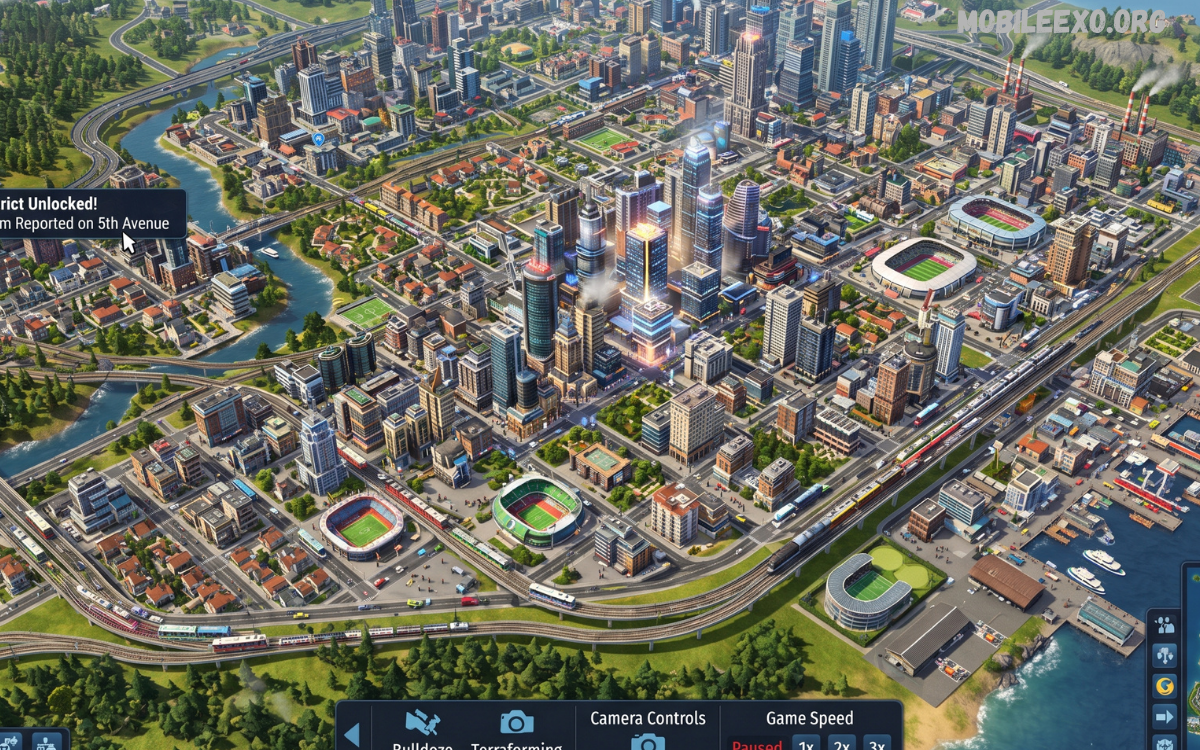
City simulator games offer an engaging way to design, build, and manage virtual cities while making important decisions about infrastructure, resources, transportation, and population growth. These games combine creativity, strategy, planning, and management mechanics, allowing players to experience the challenges of developing a successful urban environment.
Modern city simulator games provide increasingly detailed environments, realistic economies, dynamic traffic systems, advanced construction tools, and responsive populations. Whether you prefer creating futuristic metropolises, managing realistic urban communities, or developing small towns into thriving cities, these games provide countless opportunities for creative gameplay.
What Are City Simulator Games?
City simulator games are management-focused titles where players take responsibility for developing and operating a virtual city. Players typically construct residential areas, commercial districts, industrial zones, roads, public services, transportation networks, and recreational spaces.
The main objective varies between games, but successful city management usually requires balancing finances, population needs, infrastructure, environmental concerns, and long-term development. Every construction decision can influence the city’s economy, happiness, traffic flow, population growth, and overall stability.
Why City Simulator Games Are Popular
One major reason for the popularity of city simulator games is their combination of creativity and strategic decision-making. Players have the freedom to create unique urban environments while solving problems that develop as their cities become larger and more complex.
Another important factor is the sense of progression these games provide. Starting with limited resources and gradually developing a small settlement into a large metropolitan area creates a rewarding experience that encourages players to continue improving their cities.
Realistic City Building Experience
Many modern city simulator games focus heavily on realistic urban development. Players may need to consider road layouts, zoning, public transportation, electricity, water supply, waste management, healthcare, education, and emergency services.
Realistic mechanics make city building more challenging because every system can affect another part of the city. Poor road planning can create congestion, inadequate public services can reduce citizen satisfaction, and uncontrolled expansion can place significant pressure on available resources.
Essential Features of City Simulator Games
A strong city simulator usually includes flexible construction tools that allow players to design roads, buildings, neighborhoods, and public facilities. Advanced games also provide customization options that let players create different architectural styles and urban layouts.
Economic management is another essential feature because players must control budgets while funding infrastructure and public services. Balancing income and expenses becomes increasingly important as cities expand and maintenance costs increase.
Transportation and Traffic Management
Transportation plays a major role in successful city development. Efficient road networks, public transportation systems, highways, railways, and pedestrian routes can help citizens move efficiently throughout the urban environment.
Traffic management becomes particularly challenging when populations increase. Players must carefully design intersections, highways, parking areas, public transit routes, and alternative transportation options to prevent congestion from damaging productivity and citizen satisfaction.
Population Growth and Citizen Happiness
Population management is another important component of city simulator games. Citizens usually have different requirements involving housing, employment, education, healthcare, entertainment, safety, and transportation.
Keeping residents satisfied can encourage population growth and economic development. However, rapid expansion without adequate infrastructure can create unemployment, overcrowding, traffic problems, pollution, and pressure on public services.
Economic Management
Successful city development depends heavily on financial planning. Players generally earn revenue through taxes, commercial activity, industrial production, services, or other economic systems while spending money on infrastructure and public facilities.
Effective budgeting allows players to invest in important projects without creating unnecessary financial problems. Understanding when to expand, upgrade services, or save resources can make a significant difference in long-term city performance.
Construction and Customization
Construction tools are among the most enjoyable aspects of city simulator games because they give players extensive control over their virtual environments. Players can often determine where residential neighborhoods, commercial centers, industrial areas, parks, schools, hospitals, and transportation facilities are located.
Customization also allows players to develop cities according to specific themes or strategies. Some players prefer highly organized metropolitan layouts, while others enjoy creating dense urban centers, scenic communities, futuristic cities, or sprawling suburban environments.
Environmental Management
Environmental systems have become increasingly important in modern city simulation experiences. Pollution, waste, energy consumption, green spaces, water quality, and sustainable transportation can influence the development of a virtual city.
Players may need to introduce renewable energy, recycling systems, parks, efficient public transportation, and environmentally friendly infrastructure. These mechanics add another strategic layer while encouraging thoughtful urban planning.
Different Types of City Simulator Games
City simulator games cover several different styles, ranging from detailed management simulations to relaxed creative building experiences. Some titles emphasize realistic economics and infrastructure, while others focus primarily on construction, customization, exploration, or visual design.
Mobile city-building games often provide shorter gameplay sessions and simplified management systems, making them accessible to casual players. PC and console simulations can offer deeper systems, larger maps, advanced customization, and more complex economic models.
City Simulator Games on Mobile
Mobile gaming has made city-building experiences accessible to a wider audience. Smartphone and tablet games often combine city construction with simplified controls, missions, progression systems, resource management, and regular content updates.
Touchscreen controls can make placing buildings, expanding roads, and managing resources intuitive. Mobile city simulator games are particularly suitable for players who want to develop their cities during short gaming sessions without requiring a powerful computer or console.
Read Also: Best Driving Simulator Games: Best Realistic Driving Experiences in 2026
City Simulator Games on PC
PC remains one of the strongest platforms for detailed city simulation because computers can support large maps, complex economies, extensive transportation systems, and advanced graphical features. Keyboard and mouse controls also provide precise management over large urban environments.
PC city-building experiences frequently offer extensive customization through scenarios, downloadable content, modifications, and community-created assets. This flexibility can significantly extend gameplay and allow experienced players to create highly specialized cities.
Strategy and Planning Skills
Playing city simulator games can encourage strategic thinking because players must consider both immediate needs and long-term consequences. A decision that appears beneficial initially may create infrastructure problems as the city expands.
Planning ahead helps players maintain balanced growth and avoid expensive reconstruction. Understanding population trends, transportation requirements, financial limitations, and resource availability can lead to more efficient urban development.
Challenges in City Simulation
Building a successful city is rarely simple because multiple systems operate simultaneously. Players may encounter financial shortages, traffic congestion, pollution, insufficient housing, unemployment, natural disasters, or inadequate public services.
These challenges make city simulator games engaging because players must identify problems and develop practical solutions. Instead of simply constructing buildings, players need to understand how different parts of the city interact.
Creative Freedom
Creative freedom is one of the biggest advantages of city simulation. Players can experiment with different layouts, architectural styles, road systems, districts, parks, and transportation networks without facing the limitations of real-world construction.
This freedom encourages experimentation and allows every city to become different. Players can recreate realistic urban planning concepts or design imaginative cities based entirely on personal preferences.
Multiplayer and Community Features
Some modern city-building experiences include multiplayer or community-focused features that allow players to interact with other creators. These systems can introduce cooperative projects, shared challenges, competitive events, or opportunities to view cities created by other players.
Community content can also increase the longevity of a game. User-generated buildings, maps, scenarios, modifications, and design ideas provide additional possibilities beyond the original content.
Graphics and Realism
Visual quality has become an important part of the city simulation experience. Detailed buildings, realistic weather, changing seasons, traffic animations, lighting effects, and dynamic environments can make virtual cities feel more alive.
Advanced graphics are not essential for enjoyable gameplay, but they can improve immersion. Watching a city evolve from a small settlement into a busy metropolitan area can create a satisfying visual sense of progression.
How to Choose the Best City Simulator
Choosing the right city simulator depends on your preferred gameplay style and platform. Players who enjoy complex management should look for titles with detailed economies, transportation systems, resource management, and realistic citizen behavior.
Those who prefer creativity may benefit from games with flexible construction tools, extensive customization, and fewer restrictions. Mobile players should also consider controls, device requirements, offline availability, progression systems, and in-game purchase structures before selecting a game.
Tips for Building a Successful City
Start with a clear plan before expanding your city too quickly. Establish essential infrastructure, organize residential and commercial areas efficiently, and leave enough space for future roads, public facilities, and transportation improvements.
Monitor your city’s finances and population regularly because rapid expansion can create unexpected problems. Investing gradually in infrastructure and maintaining a balanced budget can help your city grow steadily without creating unnecessary management challenges.
Future of City Simulator Games
The future of city simulator games is likely to include smarter artificial intelligence, more dynamic populations, improved environmental systems, and increasingly detailed urban environments. Advanced simulation technology can make citizens, traffic, economies, and city services behave in more realistic ways.
Improved graphics and procedural generation may also allow developers to create larger and more detailed worlds. As gaming hardware and software continue to improve, city simulations can provide increasingly sophisticated experiences for players interested in urban planning and management.
Frequently Asked Questions
What are city simulator games?
City simulator games are management and strategy games where players build, develop, and manage virtual cities. Players typically control infrastructure, transportation, finances, public services, housing, and population growth.
What makes city simulator games enjoyable?
City simulator games combine creativity, planning, strategy, and problem-solving. Players can design unique cities while managing resources and solving challenges that appear as their populations and communities grow.
Can city simulator games be played on mobile devices?
Yes, many city simulator games are available for Android and iOS devices. Mobile versions generally offer simplified controls and shorter gameplay sessions while still providing construction, resource management, and city development features.
Are city simulator games suitable for beginners?
Many city simulator games are suitable for beginners because they provide tutorials, guided objectives, and gradually increasing difficulty. Beginners can start with simple construction and management tasks before learning more advanced systems.
Do city simulator games require an internet connection?
Internet requirements vary between games. Some city simulator games support offline gameplay, while others require an internet connection for cloud saves, multiplayer features, updates, events, or online services.
Conclusion
City simulator games provide a unique combination of creativity, strategy, management, and problem-solving. They allow players to design cities, manage resources, develop transportation systems, respond to challenges, and create thriving communities through thoughtful decisions.
Whether you prefer playing on mobile, PC, or console, there are city-building experiences designed for different skill levels and interests. With realistic systems, extensive customization, engaging progression, and endless opportunities for experimentation, city simulator games remain an excellent choice for players who enjoy building and managing virtual worlds.

1 Comment
Pingback: Supermarket Simulator Games: Build, Manage & Grow Your Own Store - Mobileexo