

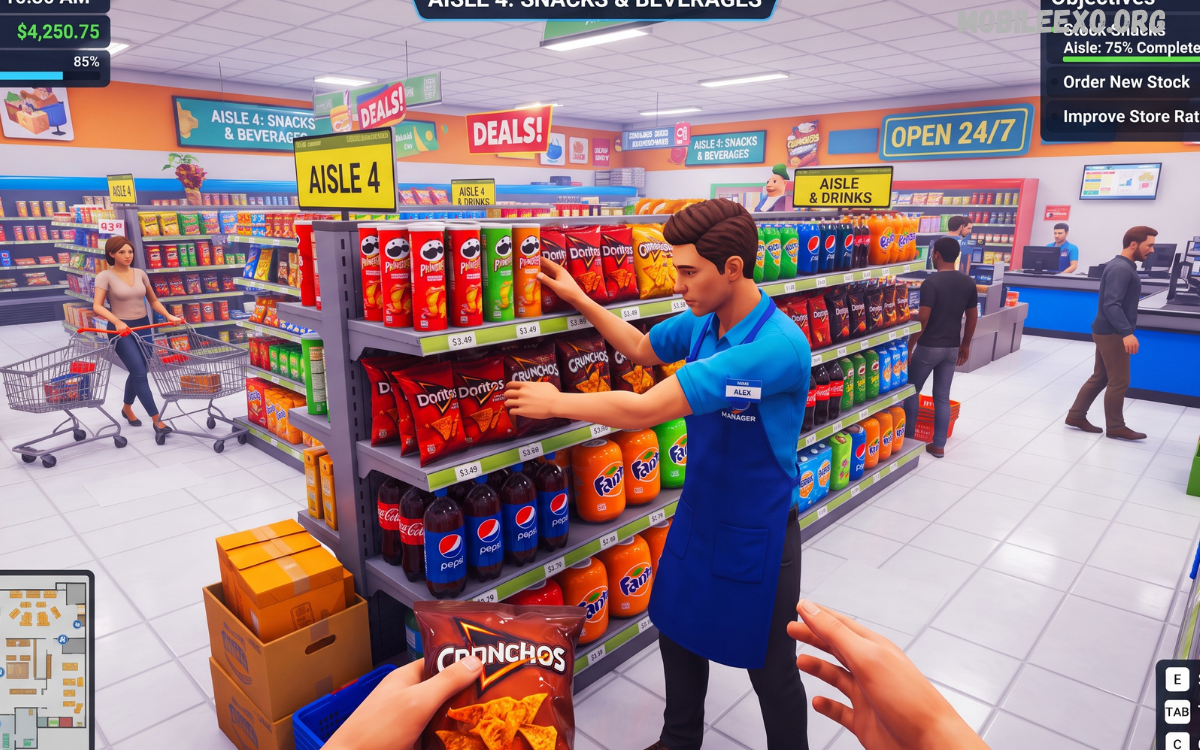
Supermarket simulator games offer an engaging way to experience retail management through interactive gameplay, strategic decisions, and realistic business challenges. Players can build stores, arrange products, manage inventory, serve customers, set prices, handle finances, and gradually transform small shops into successful supermarkets.
The popularity of supermarket simulator games has grown because these titles combine business strategy with relaxing simulation mechanics and rewarding progression. Instead of focusing entirely on competition or combat, players experience the satisfaction of building a business while learning how inventory, customer satisfaction, pricing, staffing, and store expansion work together.
What Are Supermarket Simulator Games?
Supermarket simulator games are management-focused titles where players operate virtual grocery stores and take responsibility for daily business activities. Gameplay commonly includes ordering merchandise, stocking shelves, managing checkout counters, controlling prices, cleaning stores, serving customers, and improving facilities.
Unlike traditional tycoon games, supermarket simulations often place players directly inside the store environment. This first-person or close-up perspective creates a more immersive experience because players physically perform many tasks instead of controlling every activity through menus.
Why Supermarket Simulator Games Are Popular
One major reason for the popularity of supermarket simulator games is their satisfying progression system. Players start with limited resources, make careful decisions, generate profits, and gradually create larger and more efficient stores.
The genre also appeals to players who prefer relaxing gameplay without constant pressure. Stocking shelves, organizing products, serving customers, and improving store layouts can create a satisfying gameplay loop that feels productive while remaining entertaining.
Core Gameplay Mechanics
Inventory management represents one of the most important mechanics in supermarket simulator games. Players need to monitor product quantities, identify popular items, place orders, and maintain sufficient stock without spending excessive amounts of money.
Pricing creates another important strategic element because prices influence both profitability and customer satisfaction. Setting prices too high can reduce demand, while extremely low prices may increase sales but limit profit margins.
Store Expansion & Business Growth
Expansion represents a central objective in many supermarket simulator games. Revenue earned from daily sales can be reinvested into larger premises, additional product categories, improved equipment, and advanced facilities.
Successful expansion requires financial planning because every upgrade has a cost. Players must determine whether purchasing new equipment will generate enough additional revenue to justify the investment.
Product Management
Product selection can significantly influence supermarket performance. Popular grocery products generally attract consistent demand, while specialized products can provide additional revenue when introduced at the right stage.
Players should monitor purchasing patterns and adjust inventory according to customer demand. Maintaining balanced stock levels prevents empty shelves while reducing the risk of spending excessive money on products that sell slowly.
Customer Satisfaction
Customer satisfaction is an important performance indicator in many supermarket simulator games. Happy customers are more likely to complete purchases, return to the store, and contribute to stronger business performance.
Several factors can influence customer satisfaction, including product availability, pricing, cleanliness, checkout speed, store organization, and shopping convenience. Players must therefore manage multiple areas simultaneously rather than focusing exclusively on sales.
Employee Management
Some advanced supermarket simulator games introduce employee management systems that allow players to hire workers for specific responsibilities. Employees can handle tasks such as stocking shelves, operating checkout counters, cleaning, and managing other routine activities.
Hiring employees increases operating costs, so players must balance labor expenses against productivity improvements. A carefully selected workforce can allow owners to focus on expansion, financial planning, and strategic decisions.
Store Customization
Customization makes supermarket simulator games more engaging for players who enjoy creativity. Store owners can often modify layouts, shelf arrangements, product displays, decorations, lighting, flooring, and other visual elements.
An efficient layout should provide convenient customer movement while maximizing available retail space. Players can experiment with different arrangements to determine which designs improve efficiency and create better shopping experiences.
Realistic Business Challenges
Supermarket simulator games frequently include realistic business challenges that test decision-making skills. Product costs, customer demand, operating expenses, equipment purchases, employee wages, and store improvements can all affect profitability.
Unexpected situations may require players to adapt their strategies. Changes in customer demand, limited inventory, expensive upgrades, or increased operating costs can force players to reconsider spending priorities.
Relaxing Gameplay Experience
Although supermarket simulator games involve business management, many titles offer a calm and relaxing experience. Routine activities such as arranging products, organizing shelves, cleaning stores, and processing purchases can create satisfying gameplay loops.
The gradual progression system also encourages players to continue playing. Each successful business day can unlock new products, equipment, upgrades, or expansion opportunities.
Best Features to Look For
When choosing supermarket simulator games, players should consider gameplay depth, customization options, progression systems, graphics, performance, and management complexity. A strong simulator should provide meaningful decisions rather than simply repeating basic tasks.
Inventory systems should feel responsive, while customer behavior should create realistic challenges. Store customization should provide enough flexibility to encourage experimentation and creative layouts.
Supermarket Simulator Games on Different Platforms
Supermarket simulator games are available across multiple gaming platforms, including PC, consoles, and mobile devices. Platform availability varies between individual titles, so players should check official requirements before downloading or purchasing a game.
PC versions often provide detailed management mechanics and extensive customization. Console versions can provide convenient controls and an accessible experience for players who prefer gaming from a television.
Read Also: City Simulator Games: Build, Manage & Grow Your Dream City
Tips for Beginners
New players should avoid spending all available money immediately. Maintaining a healthy cash reserve provides flexibility when inventory needs increase or unexpected expenses appear.
Start by learning customer behavior and identifying products with consistent demand. Stocking high-demand products regularly can create stable revenue and provide the financial foundation required for future upgrades.
Common Mistakes to Avoid
One common mistake is purchasing too much inventory before understanding customer demand. Excess stock can consume valuable capital and reduce the money available for important improvements.
Another mistake involves expanding too quickly. Larger stores require more products, equipment, employees, and maintenance, meaning rapid expansion can create financial pressure if revenue does not increase at the same pace.
Future of Supermarket Simulator Games
The supermarket simulation genre has significant potential for continued development as gaming technology becomes more advanced. Improved artificial intelligence can create more realistic customer behavior, dynamic demand, employee interactions, and business events.
Future supermarket simulator games may also provide deeper customization, multiplayer management, online economies, advanced analytics, and expanded virtual worlds. These features could make retail simulations increasingly immersive and strategically complex.
Frequently Asked Questions
What are supermarket simulator games?
Supermarket simulator games are management-based games where players operate virtual grocery stores. Players typically manage inventory, arrange products, serve customers, set prices, handle finances, upgrade equipment, and expand their supermarkets.
Why are supermarket simulator games popular?
Supermarket simulator games are popular because they combine business strategy, customization, progression, and relaxing gameplay. Players can gradually develop small stores into successful supermarkets while making important management decisions.
What can you do in supermarket simulator games?
Players can perform various retail activities, including stocking shelves, ordering products, managing checkout counters, setting prices, organizing stores, hiring employees, improving facilities, and expanding business operations.
Are supermarket simulator games suitable for beginners?
Yes, many supermarket simulator games are designed with accessible gameplay mechanics. Beginners can start with basic inventory and store-management tasks before gradually learning more advanced business strategies.
Can you customize supermarkets in these games?
Many supermarket simulator games offer customization features that allow players to organize shelves, refrigerators, checkout areas, decorations, flooring, lighting, and other store elements according to their preferences.
Do supermarket simulator games include employees?
Some supermarket simulator games include employee-management systems. Depending on the title, players may hire workers to stock products, operate checkout counters, clean stores, or perform other daily supermarket tasks.
How do you make money in supermarket simulator games?
Players generally generate revenue by selling products to customers and managing operating costs effectively. Maintaining suitable prices, keeping popular products in stock, improving customer satisfaction, and controlling expenses can support profitability.
What should beginners focus on first?
Beginners should focus on maintaining sufficient inventory, understanding customer demand, organizing the store efficiently, and controlling expenses. Avoiding unnecessary purchases and expanding gradually can help maintain stable finances.
Are supermarket simulator games available on mobile devices?
Yes, supermarket simulation games are available on mobile platforms, although features and gameplay complexity vary between titles. Mobile versions often emphasize simpler controls and shorter gameplay sessions.
What makes a good supermarket simulator game?
A good supermarket simulator should offer meaningful management decisions, realistic customer behavior, useful customization options, satisfying progression, balanced challenges, and responsive gameplay. Strong inventory and financial systems can make the simulation more engaging.
Conclusion
Supermarket simulator games provide an entertaining combination of business management, creativity, strategy, and simulation. Players can experience the complete process of developing a retail business, from stocking the first shelves to managing a large and profitable supermarket.
The genre continues to attract players because it offers satisfying progression, realistic challenges, customization, and relaxing gameplay. Whether you enjoy strategic decision-making, store design, inventory management, or business growth, supermarket simulator games provide an engaging virtual retail experience.

1 Comment
Pingback: Driving Simulation Games: The Ultimate Guide to Realistic Driving Experiences- Mobileexo