

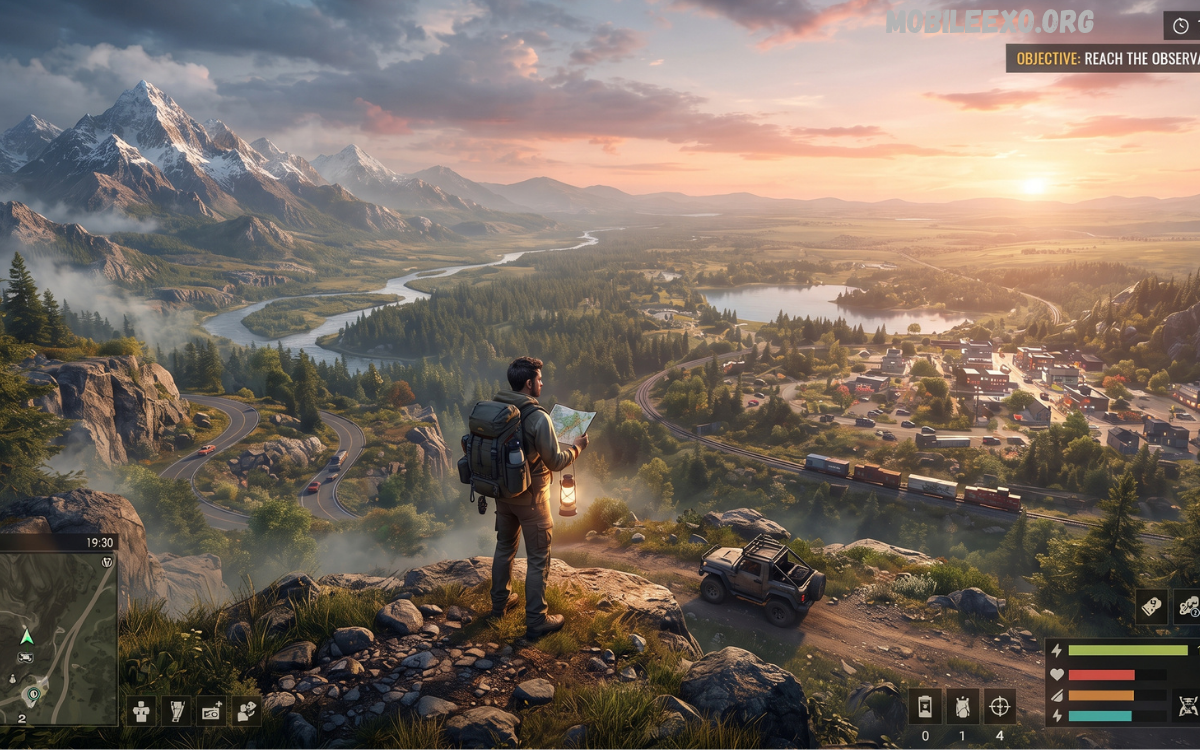
Open world simulator games combine freedom, exploration, realistic systems, and interactive environments to create gaming experiences that feel different from traditional linear titles. Instead of following a fixed path, players can explore expansive maps, operate vehicles, build careers, manage resources, complete activities, and create their own stories.
The popularity of open world simulator games continues to grow in 2026 as developers introduce larger environments, improved graphics, smarter artificial intelligence, realistic physics, and deeper gameplay mechanics.
What Are Open World Simulator Games?
Open world simulator games are titles that combine simulation mechanics with freely explorable environments. Players usually receive considerable freedom to decide where to travel, which activities to complete, how to develop their character, and how to interact with the surrounding world.
Unlike traditional simulation games that may restrict players to specific locations or missions, open world simulators emphasize exploration and player-driven progression. Dynamic weather, traffic systems, realistic economies, interactive environments, day-night cycles, and non-player characters can make these worlds feel more authentic.
Why Open World Simulator Games Are Popular
Freedom represents one of the biggest attractions of open world simulation. Players can often ignore the main objective and spend time exploring cities, driving across countryside, completing side activities, customizing vehicles, managing businesses, or simply discovering hidden locations.
Realism also contributes significantly to the genre’s popularity. Advanced physics, detailed environments, realistic vehicle handling, environmental effects, and interactive characters allow players to experience activities that may be difficult or impossible in real life.
Another important factor involves replayability. Open world simulator games frequently provide multiple activities instead of a single progression path, giving players reasons to return after completing major objectives.
Best Types of Open World Simulator Games
The open world simulation genre covers numerous categories, allowing players with different interests to find suitable experiences. Some games focus on vehicles, while others emphasize careers, survival, construction, farming, cities, or everyday life.
Open World Driving Simulators
Driving simulators place vehicles at the center of the gameplay experience. Players can explore large cities, highways, rural roads, mountains, deserts, and other environments while controlling different types of vehicles.
Modern driving simulators often include realistic handling, traffic systems, fuel management, vehicle customization, weather changes, and detailed road networks. These mechanics create a relaxed experience for players who enjoy exploration without constant combat.
Open World Farming Simulators
Farming simulators provide a slower and more strategic gameplay style. Players can manage farmland, plant crops, operate agricultural machinery, raise livestock, sell products, and expand their virtual operations.
Large maps make farming simulation more engaging because players can travel between fields, storage facilities, shops, and other locations. Seasonal systems and economic mechanics can further increase realism.
Open World Life Simulators
Life simulation games allow players to experience virtual daily activities within expansive environments. Players may create characters, purchase properties, develop careers, interact with other characters, manage finances, and explore different neighborhoods.
The appeal comes from player freedom. Instead of completing a strict sequence of missions, players can establish personal goals and develop their virtual lifestyle according to their preferred playstyle.
Open World Survival Simulators
Survival simulation combines exploration with resource management. Players usually need to search for food, collect materials, establish shelters, craft equipment, and manage environmental threats.
Large maps encourage exploration because valuable resources, locations, and challenges can appear across different regions. Survival mechanics create meaningful consequences for player decisions.
Open World Construction Simulators
Construction simulators focus on building, transportation, engineering, and project management. Players may operate heavy machinery, transport materials, complete contracts, and develop construction sites.
Open world environments make these activities more dynamic because players can travel between projects and interact with different locations instead of remaining inside a single construction area.
Key Features of Open World Simulator Games
Large Explorable Maps
Large maps provide the foundation of open world simulation. A well-designed environment should contain different regions, landmarks, roads, buildings, natural areas, and interactive locations.
Map variety prevents exploration from becoming repetitive. Urban environments, rural areas, forests, mountains, beaches, industrial districts, and highways can provide distinct experiences within one game world.
Realistic Physics
Physics systems influence how vehicles, objects, characters, and environments behave. Accurate acceleration, braking, collisions, weight distribution, suspension, and environmental effects can make simulation gameplay more convincing.
Developers increasingly use advanced physics engines to create believable interactions. Better physics can also improve immersion because player actions produce predictable and meaningful results.
Dynamic Weather
Weather systems can significantly change gameplay. Rain may reduce visibility, snow can affect movement, storms can alter travel conditions, and changing temperatures can influence survival mechanics.
Dynamic weather also improves visual variety. A familiar location can look completely different during sunrise, heavy rain, fog, or nighttime conditions.
Day-Night Cycles
Day-night systems create a changing world where activities can vary depending on the time. Certain characters, businesses, missions, and environmental events may become available at specific hours.
A realistic clock also strengthens immersion by making the virtual environment feel active rather than static.
Vehicle Customization
Vehicle customization is an important feature in many open world simulator games. Players may modify performance, appearance, accessories, storage capacity, tires, engines, or other components.
Customization gives players greater control over their equipment while encouraging progression. Upgrading a vehicle can also make exploration more efficient.
Open World Simulator Games vs Traditional Simulators
Traditional simulator games usually focus on accurately reproducing a specific activity. Examples include professional driving, aviation, farming, or construction simulations that place most of their attention on specialized mechanics.
Open world simulator games expand this concept by combining specialized simulation with unrestricted exploration. Players can leave one activity, travel across the map, discover new locations, and participate in additional systems.
This combination makes open world simulation accessible to a wider audience. Players interested in realism can focus on detailed mechanics, while casual gamers can explore the environment and enjoy activities without following strict objectives.
Benefits of Playing Simulation Games
Simulation games can encourage strategic thinking because players often need to consider resources, timing, finances, transportation, and long-term objectives. Making decisions and observing their consequences creates a structured problem-solving experience.
Open world environments can also encourage curiosity and exploration. Players learn how different systems interact while experimenting with vehicles, businesses, equipment, environments, and character progression.
How to Choose the Best Open World Simulator Game
Choosing the right game depends on personal interests. Players who enjoy vehicles should consider driving or transportation simulators, while players interested in management may prefer farming, construction, or city simulation.
Graphics and performance also matter. A visually impressive game may require stronger hardware, while optimized titles can provide smoother gameplay on lower-end systems. Checking system requirements before installation can help avoid performance problems.
Gameplay depth should also be considered. Some games prioritize realistic mechanics, while others focus on accessibility and entertainment. Players should select a title that matches their preferred balance between realism and casual gameplay.
Graphics and Visual Quality
Graphics have become an important part of modern simulation games. Detailed environments, realistic lighting, high-quality textures, vehicle models, weather effects, and natural animations can significantly improve immersion.
However, visual quality should not be the only consideration. Strong gameplay systems, responsive controls, intelligent world design, and meaningful progression often have a greater impact on long-term enjoyment.
Read Also: Dinosaur Simulator Games: Best Prehistoric Adventures to Play in 2026
Multiplayer Open World Simulators
Multiplayer functionality can transform open world simulation into a social experience. Players can explore environments together, operate businesses, complete activities, participate in challenges, or simply travel across the map with friends.
Online gameplay also creates unpredictable situations because human players introduce behavior that developers cannot completely control. This unpredictability can make familiar activities feel different during every session.
Realism and Accessibility
Realism represents a major strength of simulation games, but excessive complexity can discourage beginners. The best titles often provide adjustable difficulty settings, tutorials, assistance options, and customizable controls.
These features allow new players to understand complicated systems gradually. Experienced players can increase realism and disable assistance when they want a more demanding experience.
The Future of Open World Simulator Games
The future of open world simulator games looks increasingly focused on intelligent environments and deeper interactions. Artificial intelligence can make non-player characters more responsive, while procedural systems can generate changing events, traffic patterns, missions, and environmental conditions.
Improved hardware will also support larger worlds with greater detail. Faster storage, advanced graphics technology, better physics processing, and improved networking can allow developers to create increasingly complex simulation environments.
Virtual reality may also influence the genre. Immersive headsets can make driving, flying, construction, survival, and other simulation activities feel more direct by placing players inside the virtual environment.
Tips for Getting the Most From Open World Simulator Games
Start by learning the basic controls and primary gameplay systems. Understanding movement, navigation, resource management, vehicle operation, and progression mechanics makes exploration easier and reduces unnecessary frustration.
Avoid rushing through objectives. One of the main advantages of open world simulation is freedom, so take time to explore different areas, test available equipment, discover side activities, and experiment with the game’s systems.
Managing resources carefully can also improve progression. Whether the game involves money, fuel, equipment, crops, materials, or energy, efficient resource management can help players achieve larger objectives without unnecessary setbacks.
Open World Simulator Games on Different Platforms
Open world simulation is available across PC, consoles, and mobile devices. PC platforms generally provide greater graphical flexibility and support for advanced simulation systems, while consoles offer convenient controls and consistent hardware performance.
Mobile gaming has also expanded the genre by providing accessible simulation experiences on smartphones and tablets. Modern mobile devices can support detailed environments, realistic physics, online multiplayer, and extensive customization.
Frequently Asked Questions
What are open world simulator games?
Open world simulator games combine realistic simulation mechanics with large, freely explorable environments. Players can explore locations, complete activities, operate vehicles, manage resources, and create their own gameplay experiences.
What makes open world simulator games different?
These games provide greater freedom than traditional simulators. Players can usually explore large maps, choose different activities, interact with environments, and progress at their own pace.
Are open world simulator games realistic?
Many open world simulator games focus heavily on realism through physics, weather, traffic, economies, vehicle handling, and environmental systems. The level of realism varies between individual titles.
Which type of open world simulator is best?
The best type depends on personal interests. Driving, farming, survival, construction, aviation, and life simulators each offer different gameplay experiences.
Can open world simulator games be played offline?
Some titles support offline gameplay, while others require an internet connection for multiplayer or online features. Check the game’s requirements before installing or purchasing it.
Do open world simulator games support multiplayer?
Many modern titles include multiplayer features. Depending on the game, players can explore worlds together, complete activities, manage businesses, or participate in cooperative challenges.
Are open world simulator games suitable for beginners?
Yes. Many games include tutorials, adjustable difficulty, driving assistance, simplified controls, and other features that help beginners understand complex simulation mechanics.
Can open world simulator games be played on mobile devices?
Yes. Several open world simulation games are available for Android and iOS. Performance and features depend on the device and the specific game.
Do open world simulator games require powerful hardware?
Some advanced titles require capable hardware because of detailed graphics, large environments, physics systems, and demanding simulation features. Other games are optimized for lower-end devices.
What is the future of open world simulator games?
The genre is expected to become more immersive through improved artificial intelligence, advanced physics, dynamic environments, larger maps, multiplayer technology, and virtual reality.
Conclusion
Open world simulator games offer a unique combination of freedom, realism, exploration, and interactive gameplay. Their expansive environments allow players to create personal experiences rather than simply following predetermined objectives.
In 2026, the genre continues to evolve through improved graphics, realistic physics, dynamic environments, intelligent characters, multiplayer systems, and increasingly detailed simulation mechanics. Whether you prefer driving, farming, survival, construction, aviation, or virtual life, an open world simulator can provide hours of exploration and experimentation.

1 Comment
Pingback: Simulator Games for Mobile: Best Virtual Experiences to Play in 2026- Mobileexo