

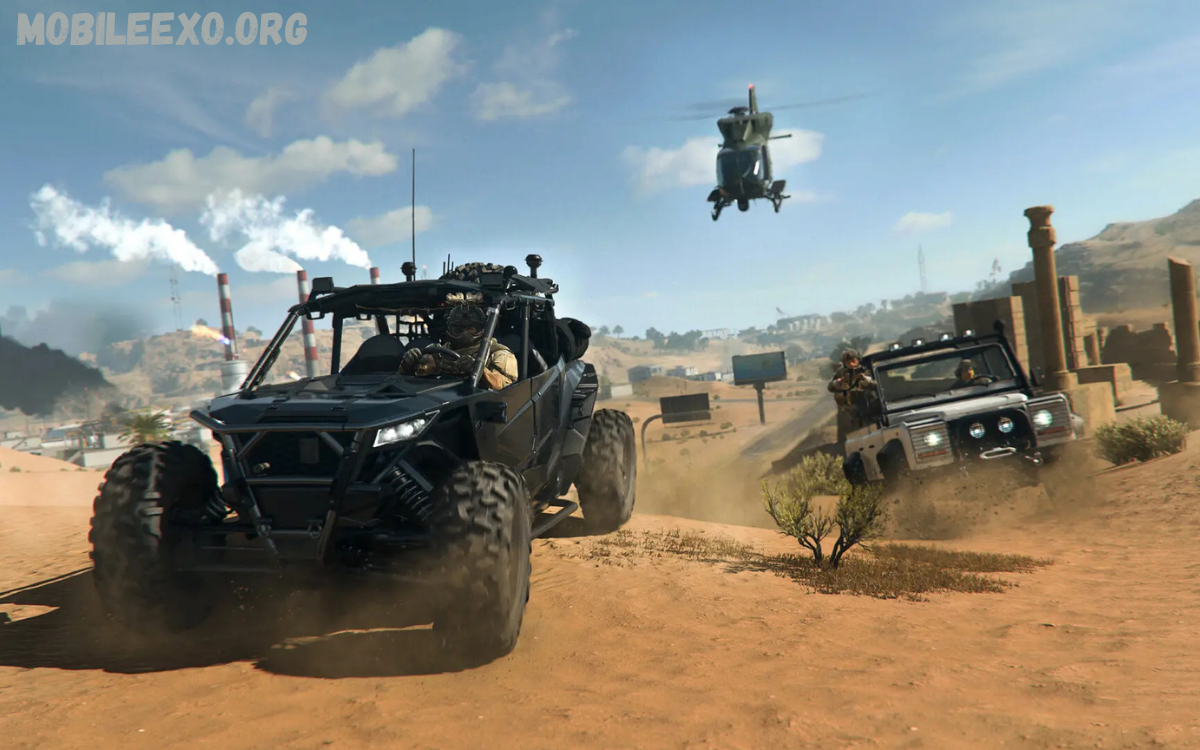
Vehicle use in battle royale environments shapes survival outcomes, tactical planning, macro-rotations, micro-engagement timing, resource flow, positional control, plus psychological pressure during combat exchanges.
This article delivers an extensive breakdown regarding vehicle categories, tactical frameworks, mobility psychology, resource consequences, map-flow impact, counter-strategies, risk-management structures, multi-phase rotation design, plus advanced coordination systems.
About Strategic Vehicle Use in Battle Royale
Strategic vehicle use in Battle Royale games refers to using cars, bikes, boats, or other transport not just for movement but as tactical tools. Vehicles help players rotate quickly, secure better positions, escape third parties, and sometimes push or eliminate opponents.
Effective use involves knowing when to drive, when to abandon, how to use vehicles as cover, and how to balance mobility with stealth. Because vehicles are loud and vulnerable to fire, skilled players use them mostly for repositioning, early-game looting routes, and mid-game rotations while minimizing late-game exposure. .
Vehicle Role Within Battle Royale Ecosystems
Vehicle use in battle royale ecosystems remains pivotal due to several structural conditions: expansive maps, dynamic safe-zone shifts, unpredictable drop patterns, squad dispersal issues, rotational congestion, plus sustained long-distance traversal demand. Vehicles supply rapid displacement capability, momentum generation, flanking capacity, escape pathways, pressure projection, scouting lift, plus logistical support.
Despite clear advantages, vehicle presence also produces vulnerability through noise signatures, visibility profiles, damage susceptibility, fuel constraints, plus explosive failure risks. Players must integrate risk-benefit evaluation across every phase, since careless mobility decisions frequently create collapse points during mid-game or late-game exchanges.
Vehicle use in battle royale frameworks ultimately aligns under three broad functions:
- Macro Mobility Function – Long-range repositioning across terrain sectors.
- Positional Control Function – Securing compounds, ridge lines, cliffs, plateaus, bridges, choke points, plus high-value rotations faster than opponents.
- Combat Support Function – Aggressive rushes, armored cover, mounted-weapon suppression (game-dependent), rescue operations, supply-line support, plus distraction mechanics.
Each function interacts directly with map topology, squad communication quality, mechanical skill, plus game-specific vehicle physics.
Tactical Frameworks Surrounding Vehicle Use
Early-Phase Mobility Framework
During initial stages, vehicle use in battle royale environments supports resource acquisition, zone scouting, drop-zone extension, plus early safety positioning. Many high-level squads land far from central combat clusters, then utilize vehicles for route compression, ensuring full loot coverage while maintaining safe-zone timing.
Key early-phase principles:
- Secure vehicle spawn knowledge across every map sector
- Prioritize units offering strongest acceleration during contested drops
- Utilize split-scouting patterns
Early-phase vehicle dominance reduces risk during mid-phase congestion.
Mid-Phase Rotational Framework
Mid-phase remains busiest due shifting safe-zone boundaries, increased encounter frequency, plus large-scale map compression. Here vehicle use in battle royale matches requires disciplined decision-making.
Mid-phase mobility principles:
- Avoid predictable main-road navigation
- Select low-exposure ridge paths, off-road lines, plus tree-dense sectors
- Maintain fuel awareness
- Pre-plan multi-layered escape routes
- Limit extended straight-line movement
- Communicate enemy-occupied high-grounds before committing
Mid-phase mismanagement frequently creates catastrophic wipes due crossfires.
Late-Phase Precision Mobility
Late-phase zone rings produce intense visibility constraints, compressed terrain, heavy fire concentration, plus severe risk during movement. Vehicles remain extremely risky yet still useful when executed correctly.
Late-phase mobility principles:
- Employ vehicles solely during urgent reposition requirements
- Use terrain dips, smoke cover, plus hard cover to exit vehicles safely
- Preserve vehicle health during mid-phase
- Time sprints during zone-closing moments when enemy vision narrows
- Abandon units early once positional control is achieved
High-level players frequently ditch vehicles before final circles.
Combat Engagement Dynamics
Aggressive Vehicle Rushes
Vehicle rushes apply psychological pressure, disrupt defender setup positions, plus generate chaotic close-range fights. Medium or heavy vehicles often deliver strongest results due durability plus stability.
Key rush principles:
- Accelerate directly toward known entry points
- Exit instantly behind hard cover
- Suppress defenders during exit sequence
- Maintain momentum, avoid stalling near entrances
- Use fake approaches before actual commitment
Executed correctly, rushes break defensive structures quickly.
Vehicle-Based Disengagement
Escape sequences rely heavily upon strong acceleration plus awareness.
Disengagement principles:
- Boost unpredictably
- Use zig-zag arcs
- Utilize external terrain cover
- Prioritize uphill exits if enemy shots originate downhill
- Throw visual obscuration effects (game-dependent)
Strong disengagement preserves survival during poorly-timed fights.
Vehicle-Assisted Flanking
Vehicle use in battle royale flanking creates reposition superiority.
Flank principles:
- Avoid direct lines toward enemy
- Loop behind terrain ridges
- Maintain silence through engine toggling (game-dependent)
- Exit early before loud cues reveal destination
Flanks succeed through surprise, not speed alone.
Read Also: Squad vs Solo Strategies in Battle Royale – Expert Tactics, Winning Tips, and Competitive Insights
Best Drop Zones in BGMI – Top Landing Spots for Every Playstyle (2025 Guide)
Drop Zone Guides for Battle Royale – Pro Landing, Loot, and Rotation Strategy
Risk Management Structures
Noise Control
Vehicle audio signatures broadcast movement patterns across vast ranges. Skilled players translate noise cues into ambush setups instantly.
Noise-control concepts:
- Turn engines off near enemy compounds
- Avoid unnecessary acceleration bursts
- Maintain maximum distance between vehicle path plus threatened zones
Noise discipline reduces ambush frequency significantly.
Durability Considerations
Durability reflects overall vehicle lifespan.
Durability concepts:
- Avoid tree collisions
- Minimize explosive exposure
- Evade turret fire angles
- Inspect tire integrity frequently
- Maintain spare vehicles during multi-zone rotations
Vehicle durability correlates strongly with survival probability.
Fuel Economy
Fuel constraints create hidden pressure during long rotations.
Fuel concepts:
- Select vehicles offering strong efficiency
- Loot fuel containers early
- Limit unnecessary detours
- Utilize downhill movement whenever possible
Fuel shortage during late phases forces risky foot travel.
Map-Flow Influence
Vehicle use in battle royale maps influences macro-flow patterns across entire lobbies.
Influence patterns:
- High vehicle population accelerates rotation speed
- Low vehicle population increases choke-point conflicts
- Off-road friendly maps reward aggressive driving
- Urban-dense maps punish careless mobility
- Bridge maps produce predictable crossing battles
Map awareness remains crucial during every strategic decision.
Squad Coordination Systems
Communication Structures
High-level squads utilize communication frameworks including:
- Pre-call routes
- Vehicle swap instructions
- Damage alerts
- Fuel updates
- Terrain warnings
- Push synchronization cues
Communication strengthens survival dramatically.
Role Separation
Squads frequently assign roles:
- Primary driver
- Navigation specialist
- Gunner (game-dependent)
- Spotter
- Flank caller
- Fuel manager (early-phase responsibility)
Defined roles enhance efficiency.
Counter-Strategies Against Vehicle Users
Vehicle countermeasures rely on controlled firepower, trap placement, plus positional advantage.
Counter-strategies:
- Target tires first
- Use high-ground angles
- Employ explosive charges
- Place traps near road chokepoints
- Bait drivers toward kill-zones
- Punish predictable rotations
Counterplay becomes essential within competitive settings.
Psychological Dimensions of Vehicle Use
Vehicle noise, speed, plus sudden arrival generate psychological dominance during engagements. Opponents often panic, misfire, reposition poorly, or waste valuable utility under pressure.
Psychological advantages:
- Force defenders toward interior spaces
- Cause premature retreat
- Trigger disorganized counterfire
- Create illusion of squad size beyond reality
- Overload enemy decision capacity
Strong vehicle players exploit psychological leverage frequently.
Esports-Level Insights
Professional battle royale teams integrate mobility analytics during every scrim block. Analysts track rotation timing, vehicle preference, average durability loss, entry angles, plus noise-signal patterns. Teams then refine entire playbooks around optimal mobility outcomes.
Esports insights include:
- Optimal spawn vehicle routes
- Time-to-zone tracking
- Fuel projection metrics
- Terrain-specific driver training
- High-risk sector avoidance
- Multi-vehicle convoy stabilization
- Delayed push timing sequences
Vehicle mastery remains central within professional environments.
Future Trends Surrounding Vehicle Use in Battle Royale Games
Industry trends indicate widespread evolution through:
- Renewable fuel systems
- Modular armor attachments
- Drone-linked transport networks
- Hybrid land-air vehicles
- Adaptive terrain physics
- Smart-noise suppression mechanics
Future battle royale ecosystems may shift significantly due vehicle-centric innovation.
Frequently Asked Questions
Why are vehicles important in battle royale games?
Vehicles provide fast rotation, safe-zone access, efficient repositioning, and tactical advantages in both combat and scouting.
Which vehicle type offers the best overall strategic value?
Medium transport vehicles such as jeeps, pickups, and crossovers often provide the best balance between durability, speed, fuel efficiency, and passenger capacity, making them ideal for most scenarios.
Are vehicles safe to use in late-game circles?
Late-game use is risky. Vehicles are loud, large, and easy targets in tight circles.
Should I engage enemies while driving?
Only when absolutely necessary. Shooting from vehicles reduces accuracy, limits situational awareness, and exposes players.
How can I reduce the risk of being ambushed while driving?
Avoid predictable routes such as main roads and bridges. Use off-road paths, maintain high speed, and change direction unpredictably.
What is the best way to counter opponents using vehicles?
Target tires, use explosives, maintain high-ground positions, or set traps in choke points.
Do vehicles consume too much fuel to be worth using?
Fuel consumption becomes an issue only during long rotations.
Conclusion
Vehicle use in battle royale environments remains core strategic infrastructure. Strong mobility systems shape engagement outcomes, rotation timing, resource access, survival probabilities, combat momentum, plus overall lobby dominance. Players capable of mastering terrain, vehicle physics, squad coordination, risk mitigation, plus psychological leverage consistently outperform opponents during competitive encounters.
Through professional-level understanding, disciplined execution, plus tactical creativity, vehicle use in battle royale scenarios transforms from simple transportation into high-impact match-winning strategy.
