

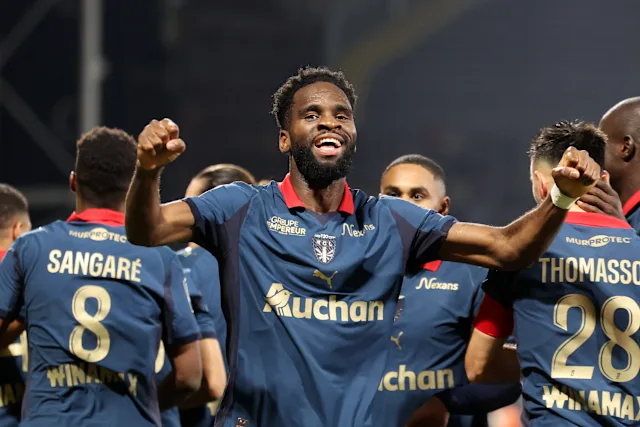
In Ligue 1, squad rotation is not only a sporting decision but a recurring source of pricing instability. Some teams rotate lineups so frequently that pre-match expectations struggle to settle, creating volatile odds movements disconnected from true performance levels. Understanding why rotation impacts prices—and when it actually matters—requires separating perception-driven market reactions from structural football realities.
Rotation affects prices because uncertainty is priced more aggressively than weakness
Markets respond more sharply to uncertainty than to small drops in quality. When lineups are unpredictable, pricing models widen assumptions to protect against unknown outcomes. The cause is informational risk, not confirmed decline in team strength. The outcome is inflated odds movement before kickoff, and the impact is frequent misalignment between implied probability and actual on-pitch capability.
Teams that rotate regularly trigger this reaction repeatedly, conditioning markets to react faster and harder each time changes appear.
Not all rotation is equal: intent determines real impact
Rotation can mean resting two players or changing half the team. Ligue 1 sides often rotate for different reasons: fixture congestion, youth development, or tactical experimentation. The problem for pricing is that markets often treat all rotation as negative.
In reality, planned rotation with role continuity preserves performance levels, while reactive rotation breaks cohesion. The impact on results—and therefore fair odds—depends on whether tactical structure survives the personnel change.
Which types of teams rotate enough to move prices consistently
Before identifying the patterns, it is important to understand that frequent rotation is usually a strategic choice rather than chaos. Certain team profiles rotate more than others, and markets respond predictably to each profile. The explanation below clarifies why odds react even before performance data confirms any effect.
Team profiles most associated with rotation-driven price swings:
- Clubs balancing domestic league and European fixtures
- Development-focused teams prioritizing squad exposure
- Mid-table sides with stable league position late in the season
- Teams with managers who emphasize tactical flexibility
- Squads with minimal quality drop between starters and backups
Interpreting this list shows that rotation itself is not a weakness signal. Instead, the market often penalizes teams for being hard to read, even when underlying strength remains constant.
How rotation creates price distortion through narrative momentum
Once a team is labeled “unreliable due to rotation,” pricing behavior compounds. Each rotated lineup reinforces the narrative, regardless of results. The cause is cognitive anchoring: traders and bettors remember surprises more than confirmations. The outcome is odds shading against the rotating team even when evidence no longer supports it.
This narrative effect explains why some Ligue 1 teams appear overpriced against stable opponents, despite similar underlying metrics across multiple matches.
Mechanism: why late lineup announcements amplify odds movement
Rotation-heavy teams often announce lineups that differ from projected elevens. When confirmation arrives late, markets must adjust quickly, increasing volatility. The mechanism is time compression—prices must incorporate new information without gradual correction, leading to overshooting rather than precision.
Using rotation patterns for odds interpretation rather than avoidance
From an odds interpretation perspective, rotation should be treated as a contextual modifier, not an automatic red flag. The key question is whether rotation changes functions or only faces. If pressing triggers, buildup roles, and defensive spacing remain intact, the performance drop is often overstated.
During pre-match evaluation, comparing expected tactical roles rather than player names leads to more accurate probability assessment than reacting to headline absences.
Data signals that show when rotation actually weakens performance
To distinguish harmful rotation from neutral rotation, observable indicators matter more than lineup turnover counts. The table below highlights process metrics that tend to change only when rotation truly disrupts team strength.
Before reviewing it, note that these indicators focus on cohesion loss, not individual quality loss.
| Indicator | What changes when rotation hurts | Why markets misread it |
| PPDA variance | Pressing timing becomes inconsistent | Odds move before this appears |
| Pass network density | Connections break between units | Names matter more than links |
| Defensive line height | Hesitation replaces coordination | Seen only after kickoff |
| Shot quality conceded | Central chances increase | Totals lag behind pricing |
| Tempo stability | Possession becomes rushed | Hard to quantify pre-match |
The interpretation is that rotation only matters when it alters collective behavior. Markets often move before these signals exist, creating temporary inefficiency.
Reading rotation-driven price movement in live environments
If heavy rotation produces early price drift without immediate structural damage, the disconnect becomes visible in live contexts. When observing in-play markets under situational conditions—especially when tempo and spacing remain stable—pricing often reflects fear rather than football logic.
In contrast, when checking live adjustments through a betting destination such as ufabet เข้าสู่ระบบ, identifying whether rotation has actually altered pressing cohesion or transition control becomes critical. If rotated players maintain role discipline, early price inflation can persist longer than justified. The cause is narrative inertia, the outcome is delayed correction, and the impact is an opportunity to interpret odds movement based on structure rather than lineup shock.
Where rotation-based price assumptions fail most often
Rotation-based pricing fails when teams deliberately rotate to maintain long-term performance, not sacrifice short-term results. Another failure case appears when opponents overestimate advantage and adopt passive approaches, neutralizing their own edge. In those matches, the rotated team often controls rhythm while benefiting from conservative opposition tactics.
The final failure point is overfitting past surprises. Markets remember rotated losses more than rotated wins, skewing future pricing regardless of current context.
Summary
Frequent rotation in Ligue 1 distorts odds primarily through uncertainty and narrative momentum rather than consistent performance decline. Markets tend to overreact to lineup changes without confirming structural impact. Rotation only weakens teams when it disrupts collective functions, not when it simply changes personnel. Interpreting rotation through tactical continuity and live structural signals leads to more accurate odds assessment than reacting to names alone.
