

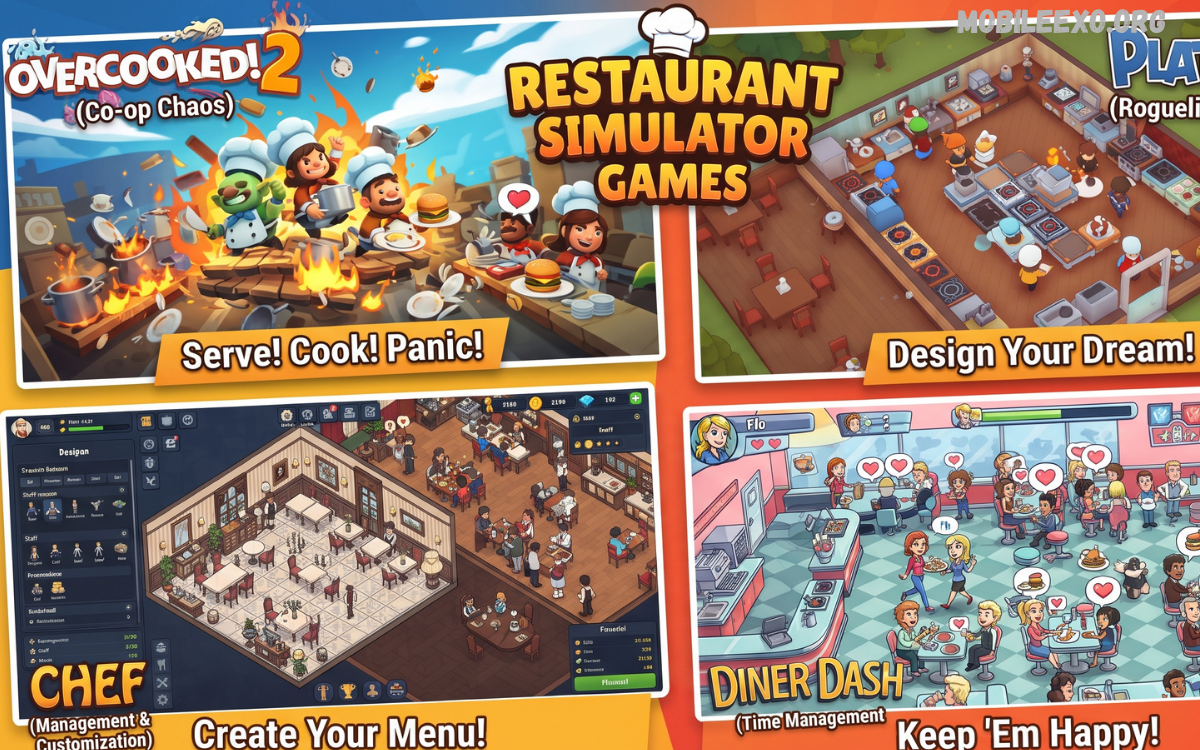
Restaurant simulator games have become a popular gaming genre for players who enjoy cooking, management, creativity, and business strategy. These games allow players to create virtual restaurants, prepare meals, serve customers, manage staff, upgrade facilities, and build successful food businesses through engaging gameplay.
Modern restaurant simulator games offer much more than simple cooking mechanics. Players can experience realistic restaurant operations, customize dining spaces, develop menus, control finances, handle customer demands, unlock new locations, and compete against challenging scenarios that test planning and decision-making skills.
What Are Restaurant Simulator Games?
Restaurant simulator games are management-focused titles designed around running a virtual food business. Players usually begin with a small restaurant and gradually expand operations by earning virtual currency, improving equipment, serving better meals, and satisfying increasingly demanding customers.
Gameplay varies considerably between titles. Some games emphasize cooking and food preparation, while others focus heavily on business management, employee organization, restaurant customization, financial planning, or time-management challenges.
Why Restaurant Simulator Games Are Popular
The popularity of restaurant simulator games comes from their combination of creativity and strategy. Players receive freedom to design restaurants, experiment with food menus, improve operations, and create unique virtual dining experiences.
Another major attraction involves progression. Starting with limited resources creates a clear sense of achievement as players unlock better appliances, larger dining areas, premium ingredients, additional employees, and new restaurant locations.
Cooking Mechanics
Cooking represents one of the most recognizable features within restaurant simulator games. Players may chop ingredients, prepare recipes, operate cooking equipment, combine ingredients, decorate dishes, and deliver completed meals according to customer requirements.
Advanced games introduce increasingly complex recipes as progression continues. Players may need to manage several orders simultaneously, monitor cooking times, prevent food waste, and maintain quality during busy restaurant periods.
Restaurant Management
Restaurant management adds strategic depth to the genre. Players typically need to monitor income, expenses, employee performance, inventory, customer satisfaction, equipment condition, and restaurant capacity.
Successful management requires balancing multiple priorities. Spending all available money on expensive equipment may improve efficiency but leave insufficient funds for ingredients, staff wages, or future expansion.
Restaurant Customization
Customization provides another important reason to play restaurant simulator games. Many titles allow players to modify walls, floors, tables, chairs, counters, kitchens, decorations, lighting, signs, and other visual elements.
Creative customization allows every restaurant to develop its own identity. Players can create modern cafés, traditional diners, luxurious restaurants, fast-food locations, themed establishments, or completely original concepts.
Staff Management
Employees often play an important role in restaurant simulation. Depending on the game, players may hire chefs, servers, cashiers, cleaners, managers, delivery workers, or specialized staff members.
Different employees can have different abilities, costs, and performance levels. Hiring skilled workers may increase operational efficiency, while inexperienced employees can provide affordable support during early stages.
Customer Satisfaction
Customer satisfaction serves as a central objective within many restaurant simulator games. Customers generally expect fast service, quality meals, clean facilities, reasonable prices, and an enjoyable dining environment.
Poor service can result in negative feedback, reduced earnings, or customers leaving before completing orders. Consistently satisfying customers can increase revenue and support faster business progression.
Menu Development
Menu development allows players to experiment with different food options. A successful menu may include appetizers, main courses, desserts, beverages, snacks, specialty dishes, and premium items depending on the restaurant concept.
Players can often unlock new recipes through progression. More advanced recipes may require expensive ingredients or specialized equipment but can generate greater revenue when managed effectively.
Restaurant Upgrades
Upgrades provide a major progression system in restaurant simulator games. Players can improve cooking appliances, refrigerators, counters, seating capacity, storage areas, decorations, service stations, and other facilities.
Equipment upgrades can increase cooking speed and reduce preparation times. Seating upgrades can allow restaurants to serve more customers, while storage improvements can support larger inventories and smoother operations.
Time Management Challenges
Many restaurant simulator games include time-management mechanics. Customers arrive continuously, orders accumulate, and players must complete multiple tasks within limited periods.
Time management requires prioritization rather than simply moving quickly. Players need to recognize urgent orders, prepare ingredients efficiently, coordinate staff, and avoid actions that create unnecessary delays.
Financial Management
Financial management separates deeper restaurant simulations from simple cooking games. Players may need to track ingredient costs, employee salaries, equipment prices, restaurant upgrades, customer spending, and overall profitability.
Revenue alone does not guarantee success. A restaurant can generate substantial sales while remaining unprofitable if operating expenses become excessive.
Inventory Management
Inventory management involves maintaining sufficient supplies without creating excessive waste. Restaurants require ingredients for recipes, making inventory planning essential during busy service periods.
Running out of important ingredients can prevent players from completing orders. Purchasing excessive quantities can tie up resources or create waste depending on the game’s mechanics.
Progression & Expansion
Progression systems give restaurant simulator games long-term appeal. Players often begin with a basic establishment and gradually unlock larger restaurants, advanced recipes, better equipment, additional employees, and new environments.
Expansion introduces fresh challenges while maintaining familiar gameplay systems. A successful small restaurant may eventually become a large business requiring significantly more complex management.
Best Features to Look For
When selecting restaurant simulator games, players should consider gameplay depth, customization options, progression systems, graphics, controls, difficulty, and available content. A strong game should provide enough variety to remain engaging beyond the initial stages.
Cooking-focused players may prefer games with detailed recipes and preparation mechanics. Strategy enthusiasts may enjoy titles with advanced financial systems, employee management, supply chains, and business expansion.
Restaurant Simulator Games on Mobile
Mobile devices provide an accessible platform for restaurant simulation. Touchscreen controls can make cooking, serving, customization, and management actions intuitive for new players.
Mobile restaurant simulator games often use progression systems designed for shorter sessions. Players can complete individual objectives, collect rewards, upgrade facilities, and return later to continue expanding their virtual businesses.
Restaurant Simulator Games on PC
PC platforms offer additional opportunities for detailed restaurant simulation. Larger screens, keyboard and mouse controls, stronger hardware, and expanded game systems can support more complex management experiences.
PC restaurant simulators may include advanced economics, realistic kitchen operations, detailed customization, employee scheduling, supply chains, and extensive business progression.
Tips for Playing Restaurant Simulator Games
Start by learning the basic gameplay systems before spending resources on unnecessary upgrades. Understanding customer behavior, cooking processes, employee roles, and financial mechanics creates a strong foundation for future expansion.
Prioritize upgrades that solve immediate operational problems. Faster cooking equipment, additional seating, better staff, or improved storage can produce stronger benefits than purely cosmetic purchases during early progression.
Read Also: Tycoon Simulator Games: Complete Guide to Building Virtual Empires
Benefits of Playing Restaurant Simulators
Restaurant simulator games can encourage strategic thinking, planning, resource management, and problem-solving. Players must evaluate different options and understand how individual decisions influence overall business performance.
These games can also encourage creativity through restaurant design and menu development. Players have opportunities to create unique environments while experimenting with different business strategies.
Common Mistakes to Avoid
One common mistake involves purchasing upgrades without considering operational needs. Cosmetic improvements can make a restaurant attractive, but essential equipment and staffing often provide greater practical benefits.
Another mistake involves expanding too quickly. Opening new locations or adding expensive facilities before establishing reliable income can create financial pressure and slow progression.
Future of Restaurant Simulator Games
The future of restaurant simulator games is likely to include more sophisticated artificial intelligence, dynamic customer behavior, deeper customization, improved graphics, and more interconnected management systems. Developers can use modern technology to create increasingly responsive virtual restaurants.
Multiplayer features may also provide new opportunities. Cooperative restaurant management, competitive business challenges, shared customization, and online events could create more social experiences within the genre.
Frequently Asked Questions
What are restaurant simulator games?
Restaurant simulator games are titles that let players operate virtual restaurants by preparing food, serving customers, managing staff, upgrading equipment, controlling finances, and expanding their businesses.
What makes restaurant simulator games popular?
These games combine cooking, creativity, strategy, and management. Players can design restaurants, create menus, satisfy customers, earn virtual currency, and gradually build larger businesses.
Are restaurant simulator games suitable for beginners?
Yes. Many restaurant simulator games introduce cooking and management mechanics gradually, making them accessible to beginners while offering deeper challenges for experienced players.
Can I play restaurant simulator games on mobile?
Yes. Many restaurant simulation titles are available for Android and iOS devices. Mobile versions commonly feature touchscreen controls, short gameplay sessions, upgrades, customization, and progression systems.
Are restaurant simulator games available on PC?
Yes. PC platforms offer restaurant simulation games with features such as detailed management, advanced customization, employee scheduling, financial planning, and larger-scale restaurant operations.
What can I manage in restaurant simulator games?
Depending on the title, you may manage menus, ingredients, employees, finances, restaurant layouts, equipment, customer service, inventory, upgrades, and multiple restaurant locations.
Do restaurant simulator games include cooking?
Most restaurant simulator games include some form of cooking. Gameplay can range from simple recipe preparation to detailed systems involving ingredients, cooking times, kitchen equipment, and food quality.
How can I improve my restaurant in these games?
Focus on efficient layouts, useful equipment upgrades, appropriate staffing, customer satisfaction, inventory management, and profitable menu choices. Avoid unnecessary spending during early progression.
Do restaurant simulator games have customization options?
Many games allow players to customize restaurant interiors, furniture, decorations, kitchen equipment, layouts, colors, themes, and other visual elements.
What should I look for when choosing a restaurant simulator game?
Consider gameplay depth, cooking mechanics, management features, customization, progression, graphics, controls, platform compatibility, difficulty, updates, and player reviews before choosing a game.
Conclusion
Restaurant simulator games provide an engaging combination of cooking, creativity, strategy, time management, and business development. Players can transform small virtual restaurants into successful establishments by preparing meals, satisfying customers, managing employees, controlling finances, upgrading equipment, and expanding operations.
The best restaurant simulator games offer meaningful progression and enough variety to keep gameplay interesting over time. Whether you prefer fast-paced cooking challenges, detailed business management, creative restaurant design, or realistic simulation, the genre offers experiences suited to different gaming styles.

1 Comment
Pingback: House Building Simulator Games: Complete Guide for Virtual Construction- Mobileexo