

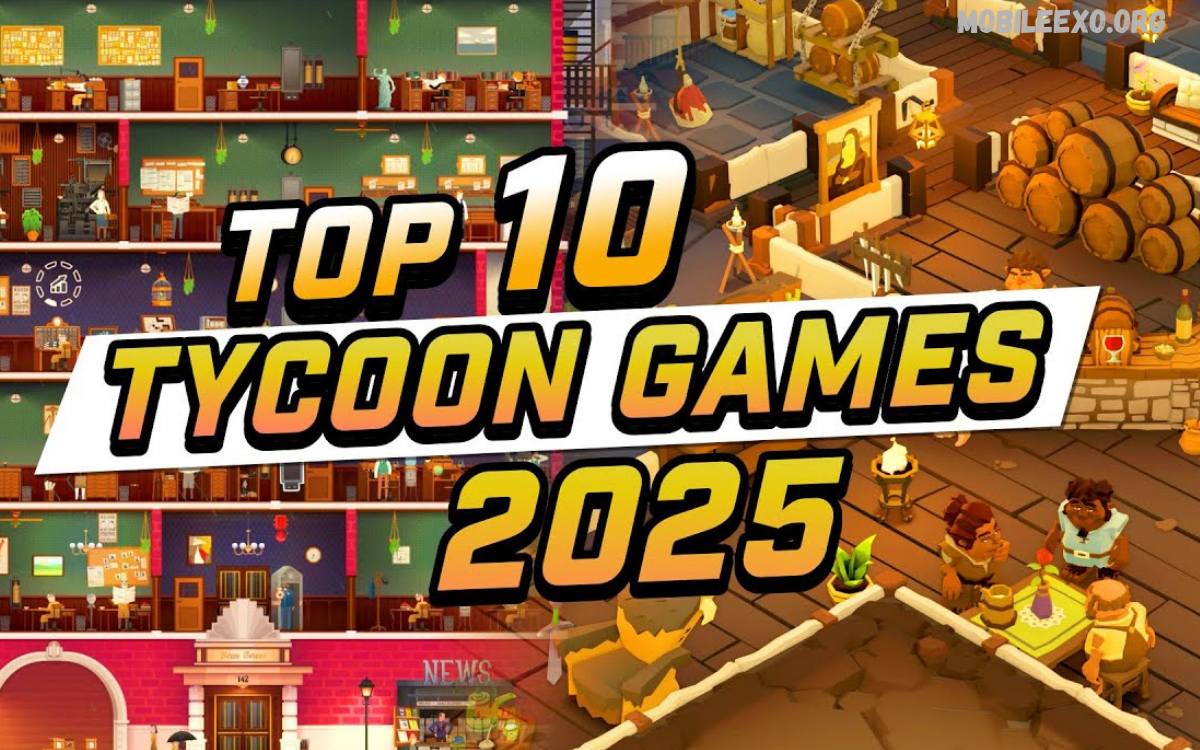
Tycoon simulator games combine strategy, management, creativity, and progression, allowing players to build businesses, manage resources, expand operations, and create virtual empires. These games transform complex economic concepts into engaging gameplay, giving players control over everything from small shops and restaurants to massive corporations, theme parks, cities, transportation networks, and entertainment businesses.
The popularity of tycoon simulator games continues growing because each title offers a different management challenge, progression system, and creative experience. Players can experiment with pricing, staffing, production, investment, expansion, and customer satisfaction while gradually turning simple operations into successful enterprises.
What Are Tycoon Simulator Games?
Tycoon simulator games are management-focused titles centered around building and operating businesses or organizations. Players normally begin with limited resources, purchase essential facilities, generate income, reinvest profits, and unlock increasingly advanced opportunities throughout the game.
Unlike conventional action games, tycoon simulator games emphasize planning and decision-making rather than fast reflexes. Successful players must understand resource allocation, customer demand, operational efficiency, employee management, upgrades, and long-term expansion.
Why Tycoon Simulator Games Are Popular
One major reason behind the popularity of tycoon simulator games involves their strong progression systems. Starting with a small operation and gradually developing it into a profitable enterprise creates a rewarding sense of achievement, especially when every improvement directly contributes toward larger goals.
Another important advantage involves freedom of decision-making. Players can often choose different strategies for generating revenue, improving services, expanding facilities, and responding to changing demands, making individual playthroughs feel different.
Business Tycoon Simulator Games
Business-focused tycoon simulator games place players in charge of companies where profitability, efficiency, and expansion determine success. Players may establish stores, factories, offices, delivery networks, technology companies, or other commercial operations.
These games frequently introduce financial management systems involving revenue, expenses, investments, employee salaries, production costs, and upgrades. Understanding how money moves through the virtual business becomes essential for maintaining sustainable growth.
Theme Park Tycoon Games
Theme park management represents one of the most entertaining categories within tycoon simulator games. Players design attractions, organize pathways, build restaurants, manage entertainment areas, and create experiences capable of attracting large numbers of virtual visitors.
Successful theme park management requires balancing creativity with profitability. Expensive attractions can attract more visitors, while poorly planned layouts may increase operational costs or reduce customer satisfaction, creating an interesting strategic challenge.
Restaurant Tycoon Games
Restaurant tycoon games focus on food businesses, customer service, staffing, menu development, decoration, and operational efficiency. Players generally begin with a small establishment before expanding seating capacity, kitchen facilities, menus, and overall business operations.
Efficient management becomes particularly important because customer satisfaction can influence revenue and growth. Players must balance food quality, service speed, pricing, employee performance, and restaurant expansion while keeping operating costs under control.
City-Building Tycoon Games
City-building titles combine urban planning with tycoon-style management systems. Players construct residential areas, commercial districts, transportation networks, public services, industrial zones, and infrastructure while attempting to maintain a stable economy.
Population growth introduces additional challenges because larger cities require better transportation, utilities, employment opportunities, and public services. Effective planning therefore becomes essential for creating sustainable virtual communities.
Transport Tycoon Games
Transport management represents another popular category involving buses, trains, ships, aircraft, trucks, and logistics networks. Players create routes, purchase vehicles, manage schedules, transport passengers or goods, and optimize operations for maximum profitability.
Route planning frequently determines success in these games. Efficient networks can generate consistent revenue, while poorly designed routes may increase expenses without producing sufficient returns, encouraging players to analyze demand before making major investments.
Farming Tycoon Games
Farming tycoon games combine agricultural production with business management. Players cultivate crops, raise animals, purchase equipment, process resources, sell products, and expand their farms as profits increase.
Seasonal systems, resource availability, production times, and market prices can introduce additional strategic elements. Players must determine which activities deserve investment while maintaining enough resources for future expansion.
Idle Tycoon Simulator Games
Idle tycoon simulator games simplify management by allowing businesses to continue generating income automatically. Players can return periodically, collect accumulated earnings, purchase upgrades, and expand operations without constantly controlling every activity.
The appeal comes from simple progression and frequent rewards. Even though gameplay requires less active management, strategic upgrade choices remain important because efficient investments can dramatically accelerate future earnings.
Multiplayer Tycoon Simulator Games
Multiplayer tycoon simulator games introduce social interaction alongside management mechanics. Players may cooperate with friends, compete against other businesses, exchange resources, participate in shared events, or compare their achievements through rankings.
Multiplayer systems can increase replay value because competition creates additional objectives beyond traditional campaign progression. Social features also encourage players to experiment with different strategies while learning from other participants.
Key Features of Tycoon Simulator Games
Strong tycoon simulator games usually include several interconnected systems that make management meaningful. Resource management, financial planning, employee control, production, customer satisfaction, upgrades, research, and expansion commonly form the foundation of the gameplay experience.
Customization can also significantly improve engagement. Players enjoy designing businesses according to personal preferences, choosing layouts, selecting facilities, adjusting services, and creating distinctive virtual environments rather than simply following predetermined development paths.
Resource Management
Resource management represents one of the most important mechanics in tycoon simulator games. Money, materials, employees, energy, inventory, land, equipment, and time may all function as limited resources that require careful allocation.
Spending everything immediately can create problems when unexpected expenses or expansion opportunities appear. Maintaining sufficient reserves while investing in productive upgrades usually provides a stronger foundation for long-term growth.
Financial Management
Understanding income and expenses helps players make better decisions throughout a tycoon simulation. Revenue may come from product sales, services, transportation, admission fees, contracts, or other business activities, while expenses can include salaries, maintenance, supplies, construction, and marketing.
Profit alone does not always indicate a healthy operation. Players should consider recurring expenses, available cash, future investments, and potential risks before committing to expensive upgrades or rapid expansion.
Employee Management
Employees can dramatically influence business performance in management simulations. Hiring additional workers may increase productivity, but excessive staffing can also raise expenses and reduce profitability.
Some tycoon simulator games allow players to train employees, assign roles, improve skills, or unlock specialized positions. Building an efficient workforce therefore becomes another strategic layer alongside financial and operational planning.
Upgrades and Research
Upgrade systems encourage continuous progression by introducing improved equipment, faster production, better services, larger facilities, and advanced technologies. Research systems can provide additional depth by requiring players to choose which innovations deserve investment.
Prioritizing upgrades based on actual business needs usually produces stronger results than purchasing every available improvement. Players should focus on changes that increase productivity, reduce costs, improve customer satisfaction, or unlock valuable expansion opportunities.
Expansion Strategies
Expansion represents a major milestone within most tycoon simulator games. Once a business becomes stable, players can often purchase additional locations, construct larger facilities, introduce new products, or enter different markets.
Rapid expansion may appear attractive, but uncontrolled growth can create financial pressure. Expanding gradually allows players to confirm that existing operations remain profitable before committing resources to new ventures.
Tips for Playing Tycoon Simulator Games
A strong starting strategy involves learning the game’s economy before making major investments. Players should understand where revenue comes from, identify important expenses, monitor demand, and determine which upgrades produce the greatest practical benefits.
Another useful strategy involves maintaining financial reserves. Having additional funds available can help players respond to unexpected challenges, purchase valuable opportunities, and continue operations during periods of slower revenue generation.
Focus on Profitability
Profitability should remain a central objective during business development. Expanding facilities without sufficient demand can increase expenses while producing limited additional revenue, potentially slowing overall progression.
Players should regularly evaluate which products, services, routes, or facilities generate the strongest returns. Removing inefficient operations and reallocating resources can sometimes produce better results than simply building more facilities.
Avoid Unnecessary Spending
Decorations, premium facilities, cosmetic improvements, and optional upgrades can make a virtual business look impressive, but they may not always improve profitability. Players should distinguish between investments that generate measurable benefits and purchases intended primarily for appearance.
A balanced approach allows players to maintain attractive environments without sacrificing financial stability. Once core operations become profitable, additional spending on customization becomes easier to justify.
Plan Before Expanding
Successful expansion usually begins with careful preparation. Players should evaluate available funds, projected revenue, staffing requirements, resource consumption, and customer demand before opening new locations or introducing major operations.
Planning also reduces the possibility of creating complicated systems that become difficult to manage. A smaller efficient business can often outperform a larger organization suffering from excessive costs and poor coordination.
Read Also: Business Simulator Games: Complete Guide to Building Virtual Companies in 2026
Best Platforms for Tycoon Simulator Games
Tycoon simulator games are available across multiple platforms, including Android, iOS, PC, consoles, and browser-based systems. Mobile platforms generally emphasize accessible controls and shorter sessions, making them suitable for players who want management gameplay during brief periods.
PC and console titles often provide deeper simulation systems, larger environments, advanced customization, and more detailed economic mechanics. The best platform depends on whether players prioritize accessibility, complexity, graphical quality, or extended management sessions.
Graphics and Gameplay
Modern tycoon simulator games increasingly combine detailed graphics with sophisticated simulation systems. Attractive environments can make building and customization more satisfying, while intuitive interfaces help players monitor complex information without becoming overwhelmed.
However, graphics should support gameplay rather than replace meaningful mechanics. The strongest experiences usually combine appealing visuals with balanced economies, useful statistics, strategic decisions, and satisfying progression.
Replay Value
Replayability remains an important characteristic of successful tycoon simulator games. Different strategies, maps, scenarios, business models, difficulty levels, and customization options can encourage players to restart campaigns and experiment with alternative approaches.
Random events and changing market conditions can add additional variety. When players cannot rely on one fixed strategy for every situation, each new campaign becomes an opportunity to test different management decisions.
Educational Benefits
Tycoon simulator games can provide informal opportunities to practice planning, budgeting, prioritization, resource allocation, and problem-solving. Players must frequently evaluate consequences before making decisions, which can encourage analytical thinking.
These games should not be treated as exact representations of real-world business environments because their economies are simplified for entertainment. Nevertheless, their management mechanics can introduce useful concepts related to costs, revenue, investment, efficiency, and strategic planning.
Future of Tycoon Simulator Games
The future of tycoon simulator games is likely to involve increasingly sophisticated artificial intelligence, dynamic economies, procedural environments, deeper customization, and more responsive virtual populations. These technologies can make simulated businesses react more realistically to player decisions.
Cross-platform progression and online communities may also become more common. Players could potentially manage businesses across multiple devices while participating in competitive events, cooperative scenarios, and community-driven content.
How to Choose the Right Tycoon Simulator Game
Choosing the right game depends on preferred themes and gameplay complexity. Players interested in creative construction may prefer theme park or city-building simulations, while business enthusiasts may enjoy corporate, restaurant, retail, or industrial management systems.
Difficulty should also be considered. Beginners may prefer accessible idle or simplified tycoon games, while experienced strategy players may enjoy detailed economic simulations involving complex supply chains, employee management, production systems, and financial planning.
Frequently Asked Questions
What are tycoon simulator games?
Tycoon simulator games are management-focused titles where players build, operate, and expand businesses or organizations. Gameplay commonly involves finances, resources, employees, upgrades, customers, production, and strategic decision-making.
Are tycoon simulator games suitable for beginners?
Many tycoon simulator games are suitable for beginners because they introduce management systems gradually. Simple interfaces, tutorials, guided objectives, and incremental upgrades can help new players understand core mechanics.
What makes tycoon simulator games fun?
Progression, customization, strategic decisions, and business growth make these games engaging. Players can start with limited resources and gradually transform their operations into successful virtual enterprises.
Can tycoon simulator games be played offline?
Some titles support offline gameplay, while others require an internet connection for cloud saves, multiplayer features, advertisements, events, or online services. Requirements vary between individual games.
Are tycoon simulator games available on mobile?
Yes, many tycoon simulator games are designed specifically for Android and iOS devices. Mobile versions often feature simplified controls, shorter sessions, automated income systems, and touch-friendly interfaces.
Do tycoon simulator games require strategic thinking?
Strategy is central to most tycoon simulations. Players commonly need to evaluate finances, resources, staffing, demand, upgrades, production, and expansion before making important decisions.
What is the best strategy for tycoon simulator games?
A reliable approach involves maintaining positive cash flow, prioritizing productive upgrades, controlling expenses, studying demand, and expanding gradually. Understanding the game’s economy is usually more valuable than spending resources quickly.
Are tycoon simulator games educational?
Tycoon simulations can introduce concepts such as budgeting, resource allocation, investment, planning, efficiency, and problem-solving. Their economic systems are simplified, so they should be viewed primarily as entertainment with educational elements.
Can tycoon simulator games be multiplayer?
Some modern tycoon games include multiplayer features such as cooperative development, competitive rankings, shared events, trading, or player-versus-player business challenges. Feature availability depends on the specific title.
Why are tycoon simulator games still popular?
Their combination of creativity, strategy, progression, and management creates long-term engagement. Players enjoy watching small operations grow into larger enterprises while experimenting with different strategies and decisions.
Conclusion
Tycoon simulator games offer an engaging combination of strategy, creativity, management, and progression. From restaurants and theme parks to cities, farms, transportation companies, and massive corporations, these games provide countless opportunities to build virtual enterprises while solving increasingly challenging management problems.
The best tycoon simulator games reward thoughtful planning rather than rushed decisions. By managing resources carefully, controlling expenses, improving operations, understanding demand, and expanding at the right time, players can create efficient virtual businesses and enjoy a satisfying sense of long-term progression.

1 Comment
Pingback: Restaurant Simulator Games: Build, Manage & Grow Your Virtual Restaurant - Mobileexo