

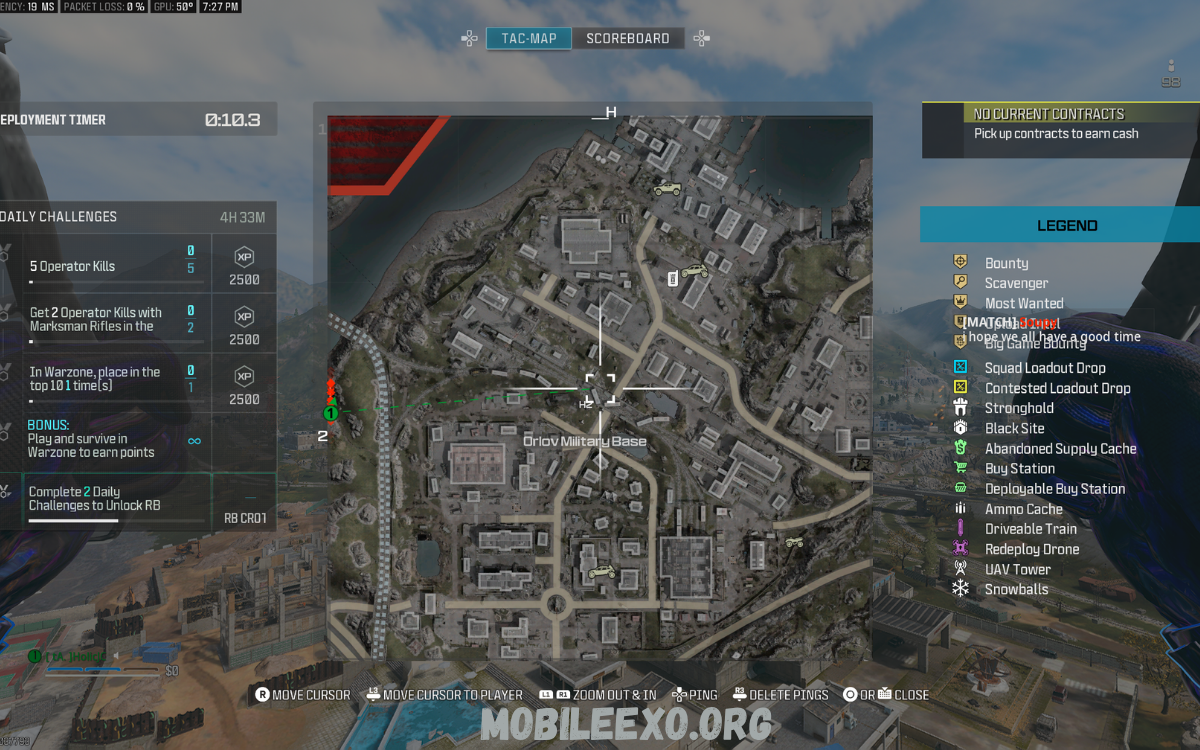
Drop Zone Guides for Battle Royale – Pro Landing, Loot, and Rotation Strategy: In a Battle Royale match, the opening decision of where to land defines the entire outcome. The drop zone serves as the foundation of a player’s strategy, determining access to loot, positioning, and survival probability.
A Drop Zone Guide offers structured insights into evaluating terrain, predicting player traffic, and managing risk across diverse maps. It teaches how to balance aggression and caution, analyze flight paths, and adapt to evolving safe zones.
Drop Zone Guides for Battle Royale
Battle Royale competition demands precision, awareness, and consistent decision-making. Each match begins with a single defining choice of where to drop. A perfect drop determines early survival, loot efficiency, and rotation strength. Understanding drop zones, flight paths, circle patterns, and player traffic converts uncertainty into advantage.
This guide delivers a structured breakdown of drop zone strategy across major Battle Royale environments. It explores core principles, risk management, landing methods, and advanced movement tactics that separate skilled players from the rest of the field.
About Drop Zone Guides for Battle Royale
Drop Zone Guides for Battle Royale focus on one of the most crucial phases of every match — the landing stage. In competitive and casual Battle Royale gameplay alike, success begins long before the first firefight. A drop zone determines how quickly a player gears up, how safely they can position for mid-game, and how effectively they transition toward the final circle.
These guides are designed to help players make informed landing choices by breaking down map awareness, loot distribution, and rotation strategy. Each drop zone carries different advantages and risks depending on location, elevation, and proximity to the flight path. Understanding those factors turns early-game randomness into predictable control.
Understanding Drop Zones
A drop zone represents the initial landing area during match entry. It defines resource access, mitigates potential threats, and maps control. Each drop zone presents unique variables: loot density, elevation, travel routes, and early encounter probability.
Competitive players approach drop selection using tactical logic rather than random choice. They analyze high-value points, proximity to vehicles or transport systems, and expected flight path distribution. The correct balance between loot access and engagement risk maximizes survival odds.
Key Drop Zone Variables
- Loot Density – Measures item count and rarity probability. High density supports fast gearing but attracts multiple teams.
- Traffic Pressure – Indicates the number of squads typically contesting the same zone.
- Rotation Access – Refers to routes available after looting. Strong zones connect easily to roads, ziplines, vehicles, or choke points.
- Terrain Advantage – Elevation and cover shape in early fights. Buildings, cliffs, and vegetation improve positioning.
- Circle Predictability – Safe zones shift across maps with weighted randomness. Understanding map bias helps align early movement.
Principles of Optimal Drop Strategy
Risk Control
Early elimination often results from reckless entry into high-traffic locations. Control risk by evaluating the distance from the initial flight path. The further the zone sits from the route, the fewer squads reach it immediately. Landing slightly off-path reduces conflict without sacrificing loot quality.
Loot Prioritization
Not all loot offers equal value. Prioritize weapon access first, then armor, then healing. Movement or defensive tools come next. High-tier locations often guarantee rare gear, but even smaller settlements can provide competitive loadouts if looted efficiently.
Rotation Planning
After initial looting, rotation timing determines match pacing. Rotate before the first zone closes to secure positional control. Late movement invites ambushes and exposure. Identify choke points, cliffs, bridges, and ridgelines on the minimap. These landmarks dictate safe travel and avoidance of engagement.
Situational Flexibility
Never become overly attached to a single landing site. Dynamic adaptation ensures resilience across varying flight paths. Prepare at least four familiar drop zones across each map quadrant: north, south, east, west. That flexibility keeps early decisions stable under different trajectories.
Landing Technique Optimization
Precise landing mechanics save seconds and guarantee loot advantage. Every Battle Royale platform implements descent physics differently, but core mechanics remain consistent.
Descent Mechanics
- Initial Dive Phase: Tilt the camera directly downward to accelerate toward terminal velocity.
- Transition Glide Phase: Flatten descent once halfway down to extend horizontal distance.
- Final Precision Phase: Adjust angle for exact landing on rooftops, windows, or high ground.
Perfect timing during transition maximizes both speed and accuracy. Competitive players often simulate drop timing in custom modes to refine visual distance judgment.
Early Engagement Preparation
Land directly on weapon spawns whenever possible. Immediate access to a weapon converts chaos into an advantage. Avoid extended gliding above contested buildings. Dropping late guarantees vulnerability before arming.
Map Positioning and Safe Zone Control
Every Battle Royale map contains predictable safe zone tendencies. Centralized early positioning minimizes travel distance, but edge-control strategies often produce safer routes.
Central Control Method
- Early drop near mid-map.
- Fast loot, immediate positioning within the first circle.
- Short travel time between subsequent zones.
- High encounter rate but consistent zone alignment.
Edge Rotation Method
- Drop near the outer ring or the coastal perimeter.
- Loot more slowly and rotate inward, using terrain for concealment.
- Lower engagement frequency, higher survival longevity.
- Requires precise time management before gas or storm closure.
Professional squads often mix both strategies. Edge play allows resource collection; central play guarantees positional dominance for later circles.
Team Drop Coordination
Squad play introduces additional complexity. Efficient team distribution ensures full coverage of loot areas without leaving any areas isolated.
Team Landing Protocol
- All teammates mark exact building clusters before launch.
- One member calls the drop countdown and descent cue.
- Maintain visual line across gliding trajectory to prevent separation.
- Assign quick loot sectors: interior, roof, outskirts, vehicle lot.
Clear communication during descent helps avoid confusion and ensures weapon parity among team members.
Engagement Roles Post-Landing
- Entry Fragger: Leads initial skirmishes, clears buildings.
- Support: Follows with healing items, shields, and throwables.
- Anchor: Controls rotation direction and overwatch angles.
- Scout: Monitors approaching threats, marks alternative routes.
Structured landing discipline enables efficient early-game control, reducing the risk of friendly fire.
Hot Drops vs. Safe Drops
Hot Drops
High-risk, high-reward zones are located near the center or directly under the initial flight path. Contain the best loot but guarantee multiple team landings.
Advantages
- Immediate weapon access
- Early kill opportunities
- Fast progression toward full gear
Disadvantages
- High elimination probability
- Minimal recovery options after the initial fight
- Loot competition causes time pressure.
Safe Drops
Low-traffic regions away from the flight path, often near map edges.
Advantages
- Controlled looting
- Consistent survival into mid-game
- Easier communication during descent
Disadvantages
- Lower loot density
- Longer travel to safe zones
- Possible lack of vehicles
Elite players rotate between both based on match objectives. Tournament points often favor consistency over aggression, while ranked modes reward kill accumulation — understanding the difference changes drop philosophy.
Vehicle and Rotation Utility
Vehicle locations provide strategic value for late-zone rotations. Efficient map awareness regarding car, bike, or zipline spawn rates grants consistent escape routes.
Vehicle Usage Guidelines
- Initial Loot Transport: Move quickly toward unlooted compounds.
- Circle Repositioning: Enter zone early to secure defensive ground.
- Team Evacuation: Extract from losing fights or third-party pressure.
Avoid overexposure during travel. Vehicles generate visual and audio cues detectable across wide distances. Use smoke grenades or natural terrain to obscure routes when leaving open fields.
Advanced Drop Analytics
Professional Battle Royale teams rely on heat maps, replay footage, and statistical analysis to inform their strategies. They monitor opponent landing habits, circle data, and loot spawn frequency to design predictable early-game control.
Common Analytical Methods
- Drop Heat Mapping: Identifies player clustering over multiple matches.
- Loot Value Indexing: Calculates average weapon tier per location.
- Circle Probability Modeling: Tracks historical safe zone bias.
- Engagement Time Graphs: Estimates combat onset timing by location.
Through structured analysis, players build drop routines that minimize randomness. Mastery stems from preparation rather than improvisation.
Psychological Dynamics of Drop Selection
The drop choice also reflects the player’s mindset. Aggressive personalities tend to gravitate toward hot zones, seeking immediate adrenaline engagement. Strategic thinkers prefer calculated perimeters and long-term planning.
Understanding personal tendencies improves consistency. A balanced mental framework ensures composure even when early loot fails to appear. Calm decision-making within the first minute sets the match’s trajectory.
Read Also: Mastering Circle Management in Battle Royale
Mastering Late-Game Tactics in Battle Royale
Essential Battle Royale Tips for Beginners – A Complete Starter’s Guide
Best Loadouts in Free Fire – Expert Picks for Every Playstyle
Best Weapons in PUBG Mobile – The Ultimate Guide for Every Player
Environmental Awareness and Terrain Adaptation
Terrain dictates survival. Hills, rivers, cliffs, and building density alter engagement flow. Experienced players treat terrain as a weapon.
Urban Drop Strategy
- Prioritize rooftops for vision and vertical control.
- Anticipate stairwell choke points and corner traps.
- Rotate through alleys or side walls to surprise enemies.
Rural Drop Strategy
- Exploit foliage for concealment.
- Use elevation for overwatch during rotations.
- Position behind rocks or ridges during healing phases.
Awareness of local geography transforms average zones into tactical strongholds.
Case Studies by Title
Fortnite
- Central hubs like Mega City or Tilted Towers produce high loot but chaotic landings.
- Peripheral gas stations or fishing docks provide quieter starts.
- Build resources immediately; materials determine early fight outcomes.
PUBG
- Military Base, Pochinki, and School represent legendary hot zones.
- Edge towns like Lipovka or Primorsk enable methodical loot with safe exits.
- Vehicle knowledge remains essential for cross-map movement.
Apex Legends
- Fragment East, Promenade, and Thermal Station dominate ranked landings.
- Remote towers and edge complexes offer strategic isolation.
- Zipline mastery ensures faster third-party rotations.
Warzone
- Airport, Factory, and Highrise create intense firefights.
- Coastal or hillside villages balance loot and cover.
- Buy station tracking forms as a core tactical advantage.
Each title follows the same logic: information control, speed, and adaptability determine outcomes, not random luck.
Performance Optimization Checklist
| Early Survival | Drop away from dense flight path clusters |
| Gear Efficiency | Prioritize weapon + armor before utility |
| Rotation Readiness | Identify nearest vehicle or zipline |
| Communication | Call out landing marks and enemy presence |
| Engagement Control | Fight only when positional advantage exists |
| Late-Game Transition | Maintain circle proximity awareness |
Consistent adherence to this checklist leads to measurable improvements over time.
Training and Repetition
Effective drop mastery requires practice. Create a personal training routine:
- Select one map and five different zones.
- Track time from drop to first weapon pickup.
- Record survival duration and kill ratio.
- Repeat this process over 20 matches, adjusting the strategy with each session.
Quantitative feedback produces faster decision refinement than instinct alone.
Frequently Asked Questions
Why is loot density important?
Loot density defines how much and how quickly you can gear up after landing. High-density zones provide faster access to weapons, shields, and healing, which are essential for early fights.
How can I land faster than other players?
Aim straight down at the start, then flatten your glide at mid-descent to cover horizontal distance efficiently.
How do rotations affect drop zone strategy?
Rotations determine how players move between zones as the safe area shrinks. Strong drop zones offer multiple rotation options through vehicles, zip lines, or open terrain paths.
What should I prioritize after landing?
Focus on obtaining a weapon first, then armor or shields, followed by healing and mobility tools.
How can teams coordinate their drop effectively?
Mark landing points before jumping, assign loot zones to each teammate, and maintain visual contact during descent.
Do professional players always drop in the same place?
No. Professionals study flight paths, map rotations, and opponent tendencies. They have 3–5 preferred drop zones across different map regions to stay adaptable in each match.
Why is mastering drop zones essential for improvement?
Drop zone mastery builds consistency, reduces random eliminations, and improves early-game control.
Conclusion
Battle Royale victory begins long before the first engagement. The drop zone defines every subsequent opportunity, loot timing, fight probability, circle positioning, and rotation freedom. Professional consistency arises through calculated landing patterns, disciplined looting, and informed risk evaluation.
Each match becomes a strategic equation: position × timing × awareness = success. By mastering drop zones, players transform randomness into deliberate control, achieving stable performance in both casual and competitive modes.
