

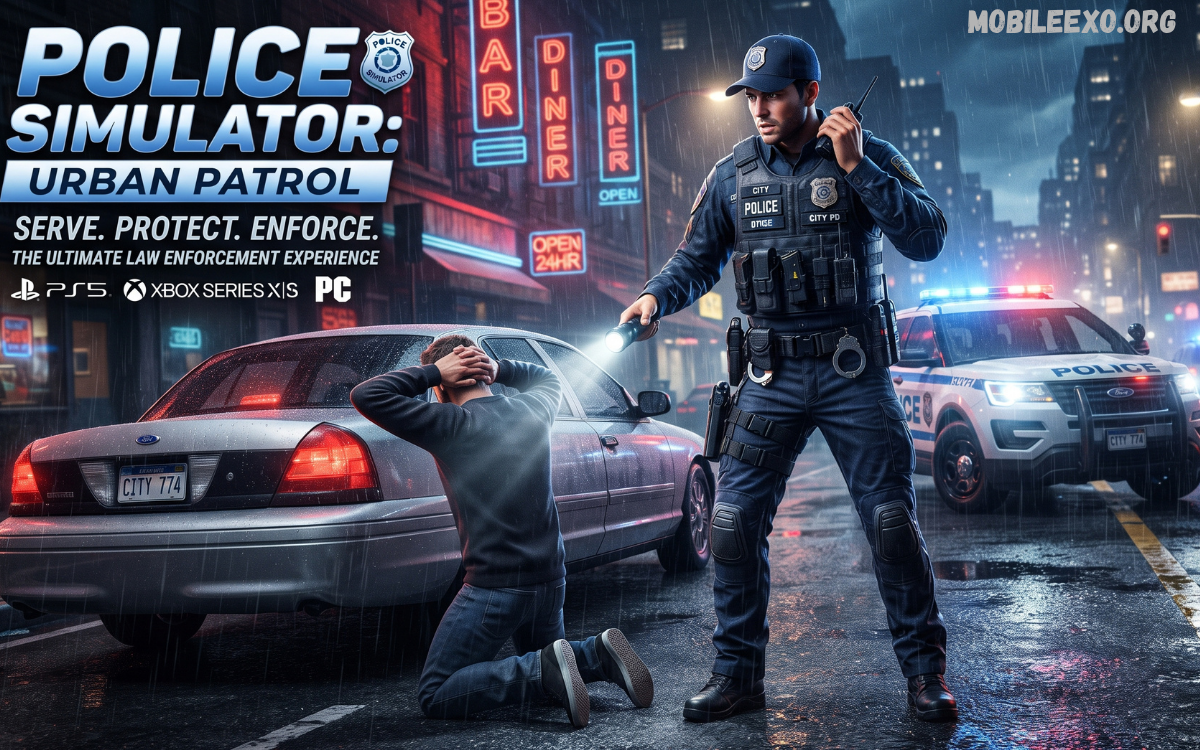
Police simulator games offer an engaging way to experience law enforcement gameplay through realistic patrols, traffic enforcement, investigations, emergency responses, and decision-making challenges. Unlike traditional action games focused entirely on combat, these simulation titles emphasize observation, responsibility, procedures, communication, and strategic thinking.
Modern police simulator games have become increasingly sophisticated, combining detailed environments, dynamic traffic systems, realistic vehicles, character interactions, and varied missions. Players can experience activities such as checking suspicious behavior, managing traffic incidents, responding to emergencies, investigating reports, issuing citations, and maintaining public safety within virtual cities.
What Are Police Simulator Games?
Police simulator games are simulation titles designed around law enforcement activities, allowing players to take control of police officers, patrol vehicles, or specialized units. Gameplay commonly includes routine patrols, traffic monitoring, incident response, evidence collection, suspect identification, and other fictionalized policing scenarios.
The primary appeal comes from realism and responsibility rather than nonstop action. Players must observe situations carefully, select appropriate responses, follow game-specific procedures, complete objectives, and manage multiple incidents while exploring detailed virtual environments.
Why Are Police Simulator Games Popular?
The popularity of police simulator games comes from their combination of exploration, strategy, simulation, and role-playing mechanics. Players interested in realistic games can experience structured law enforcement scenarios while making decisions that influence mission outcomes and progression.
Another major advantage involves variety. A single game may include traffic patrols, parking enforcement, accident management, investigations, emergency calls, vehicle pursuits, and neighborhood patrols, creating a broader experience than conventional driving or action games.
Realistic Patrol Gameplay
Patrol gameplay represents one of the defining features of modern police simulator games. Players usually travel through city streets, monitor traffic, observe unusual situations, respond to calls, and complete assigned objectives throughout an open or semi-open environment.
Realistic patrol systems can make ordinary activities surprisingly engaging. Following traffic rules, recognizing violations, interacting with virtual citizens, checking vehicles, and responding appropriately to incidents can create a slower but more immersive gaming experience.
Traffic Enforcement Missions
Traffic enforcement provides another important gameplay element within police simulator games. Players may monitor speeding vehicles, investigate parking violations, manage road incidents, perform traffic stops, and respond to accidents.
These missions encourage attention and accuracy rather than random action. Successful gameplay often depends on recognizing violations correctly, selecting suitable responses, completing required procedures, and avoiding unnecessary mistakes.
Open-World Police Simulator Games
Open-world environments give police simulator games additional freedom by allowing players to explore large cities and discover incidents dynamically. Instead of following a fixed sequence of missions, players can patrol different neighborhoods, accept calls, and encounter various situations.
A well-designed open world can make every patrol feel different. Changing traffic patterns, weather conditions, random events, pedestrians, emergency calls, and evolving missions can create a more unpredictable experience.
Police Vehicles and Driving Mechanics
Police vehicles play a central role in many police simulator games because patrol duties frequently involve driving. Realistic handling, traffic behavior, vehicle customization, sirens, emergency lights, and navigation systems can significantly improve immersion.
Driving mechanics also influence mission performance. Players may need to navigate busy streets, reach incidents quickly, follow traffic regulations, or pursue objectives without causing unnecessary collisions.
Investigation-Based Gameplay
Investigation mechanics add depth beyond standard patrol activities. Depending on the game, players may examine locations, collect clues, question characters, inspect vehicles, identify evidence, or connect information to complete fictional cases.
Investigation-focused gameplay appeals to players who prefer detective-style challenges. Careful observation becomes more important than speed, creating a methodical experience built around discovering information and solving scenarios.
Emergency Response Missions
Emergency response missions introduce urgency into police simulator games. Players may receive calls involving traffic accidents, disturbances, suspicious activity, missing persons, or other fictional emergencies requiring quick decisions.
These missions test navigation, situational awareness, and prioritization. Players must reach the correct location, understand the objective, follow the game’s procedures, and complete the assignment efficiently.
Career Progression
Many police simulator games include career systems that reward players for completing missions and improving performance. Progression may unlock new vehicles, districts, equipment, uniforms, assignments, or advanced scenarios.
Career systems provide long-term motivation because players have clear goals beyond individual missions. Completing successful patrols and maintaining strong performance can gradually expand gameplay opportunities.
Police Simulator Games for Beginners
Beginners should choose games with accessible controls, tutorials, clear objectives, and manageable difficulty. A complicated simulation can become frustrating when players are unfamiliar with patrol systems, vehicle controls, mission requirements, or investigation mechanics.
Starting with basic patrol missions is usually a good approach. Learning traffic systems, navigation, interaction controls, and mission objectives first makes advanced scenarios easier to understand.
Police Simulator Games for Realism Fans
Players seeking realism should prioritize titles featuring detailed environments, realistic traffic, authentic vehicle behavior, procedural missions, dynamic events, and structured gameplay systems. Strong simulation mechanics can make routine activities feel meaningful.
Realism also depends on game balance. Excessive complexity can reduce enjoyment, while overly simplified mechanics may feel closer to an arcade game, so the ideal title depends on how much simulation depth the player wants.
Police Simulator Games on PC
PC platforms are particularly suitable for police simulator games because they support detailed graphics, expansive environments, keyboard and controller controls, and larger displays. Powerful hardware can also improve visual quality and environmental detail.
PC players can find simulation experiences ranging from casual patrol games to detailed law enforcement titles. Before choosing a game, checking system requirements, gameplay features, controls, and supported modes can help ensure a smoother experience.
Police Simulator Games on Mobile
Mobile police simulator games provide convenient gameplay for players who prefer gaming on smartphones or tablets. Touch controls, shorter missions, vehicle-based gameplay, and simplified simulation systems make mobile titles accessible.
However, mobile experiences can vary significantly in quality. Players should consider graphics, controls, mission variety, offline functionality, advertisements, storage requirements, and update frequency before installing a game.
Multiplayer Police Simulator Games
Multiplayer features can make police simulator games more social by allowing players to cooperate during patrols, coordinate missions, drive different vehicles, or manage fictional incidents together. Team-based gameplay can add communication and strategic elements.
Cooperative gameplay works especially well when different players have separate responsibilities. One player may focus on driving while another handles mission objectives, creating a more interactive simulation experience.
Features to Look For
When choosing police simulator games, players should examine several important features before starting. Realistic environments, responsive controls, varied missions, vehicle customization, dynamic events, career progression, and stable performance can significantly improve overall quality.
Graphics are important, but gameplay systems matter equally. A visually impressive game may become repetitive without meaningful missions, while a simpler title with excellent mechanics can remain entertaining for much longer.
Read Also: Car Mechanic Simulator Games: Complete Guide to Virtual Garage Experiences
Best Gameplay Elements
The strongest police simulator games combine multiple systems instead of relying on a single gameplay mechanic. Patrols, investigations, traffic enforcement, emergency responses, exploration, driving, and progression can work together to create a complete experience.
Mission variety also helps maintain interest. Repeating identical traffic stops or patrol objectives can become predictable, while diverse scenarios encourage players to explore different aspects of the simulation.
Realism Versus Entertainment
Realism represents an important part of police simulator games, but excessive realism can sometimes make gameplay slower or more complicated. Developers must balance authentic mechanics with enjoyable objectives, intuitive controls, and satisfying progression.
The best experiences usually provide enough realism to create immersion without turning every task into unnecessary complexity. This balance allows beginners to enjoy the game while experienced simulation fans still have meaningful challenges.
Tips for Better Gameplay
Players can improve their performance by learning controls, reading mission objectives carefully, observing surroundings, and understanding how different systems work. Rushing through objectives can lead to mistakes, especially during investigation or traffic-related missions.
Planning also helps during larger scenarios. Checking routes, understanding vehicle controls, monitoring mission requirements, and responding calmly can improve results while making gameplay more enjoyable.
Graphics and Sound Design
Modern police simulator games increasingly use detailed graphics to create convincing cities, roads, vehicles, buildings, and characters. Lighting, weather, traffic density, and environmental animations can further strengthen immersion.
Sound design contributes equally to atmosphere. Engine sounds, radio communication, sirens, traffic noise, environmental effects, and mission alerts can make virtual patrols feel more dynamic and engaging.
Choosing the Right Police Simulator Game
Choosing the right police simulator game depends on personal preferences, gaming platform, desired realism, and preferred mission types. Players who enjoy driving may prefer patrol-focused titles, while investigation fans may want games featuring detective mechanics.
Players should also consider session length and difficulty. Casual gamers may prefer accessible missions, while dedicated simulation fans may enjoy complex systems, detailed procedures, larger maps, and longer career progression.
Future of Police Simulator Games
The future of police simulator games looks promising as developers continue improving artificial intelligence, physics, graphics, environmental systems, and dynamic mission generation. More responsive virtual characters and unpredictable scenarios could make future simulations considerably more immersive.
Advancements in technology may also create richer cities with smarter traffic systems and more interactive environments. Better hardware and improved game engines can provide developers with greater opportunities to create detailed law enforcement simulations.
Frequently Asked Questions
What are police simulator games?
Police simulator games are simulation titles that let players experience fictional law enforcement activities, including patrols, traffic enforcement, investigations, emergency responses, and vehicle-based missions.
Are police simulator games realistic?
Many police simulator games focus on realism through detailed environments, traffic systems, vehicles, procedures, missions, and character interactions. The level of realism varies between individual games.
Can I play police simulator games on PC?
Yes. Many police simulator games are available on PC and offer detailed graphics, larger environments, keyboard and controller support, and advanced simulation mechanics.
Are police simulator games available on mobile?
Yes. Mobile platforms offer various police simulator games featuring patrol missions, driving challenges, traffic enforcement, and simplified law enforcement gameplay.
Are police simulator games suitable for beginners?
Many titles include tutorials, simple missions, and accessible controls for beginners. Starting with basic patrol and traffic missions can help new players learn the gameplay systems.
Do police simulator games have open-world maps?
Some police simulator games feature open-world or semi-open environments where players can patrol neighborhoods, explore cities, respond to incidents, and complete dynamic missions.
Can police simulator games include multiplayer?
Some titles offer multiplayer or cooperative features, allowing players to work together on patrols, missions, and fictional emergency scenarios.
What makes a good police simulator game?
A good police simulator game typically combines responsive controls, realistic environments, varied missions, effective progression systems, engaging driving mechanics, and immersive sound and graphics.
Do police simulator games include investigations?
Yes. Some games include investigation-focused missions involving fictional cases, evidence, clues, locations, character interactions, and problem-solving challenges.
What should I consider before choosing a police simulator game?
Consider the platform, realism level, graphics, mission variety, controls, map size, progression system, multiplayer support, difficulty, and overall gameplay style before choosing a title.
Conclusion
Police simulator games provide a distinctive gaming experience combining simulation, exploration, driving, strategy, investigation, and role-playing elements. Instead of focusing exclusively on fast-paced action, these games encourage players to observe situations, complete structured missions, make decisions, and explore realistic virtual environments.
Whether you prefer traffic enforcement, open-world patrols, emergency response, investigations, or vehicle-based gameplay, there are police simulator games capable of delivering an engaging experience. Choosing a title with strong mission variety, responsive controls, realistic systems, and consistent progression can provide hours of entertaining gameplay for both newcomers and experienced simulation fans.

1 Comment
Pingback: Airport Simulation Games: Complete Guide to the Best Virtual Airport Experiences- Mobileexo