

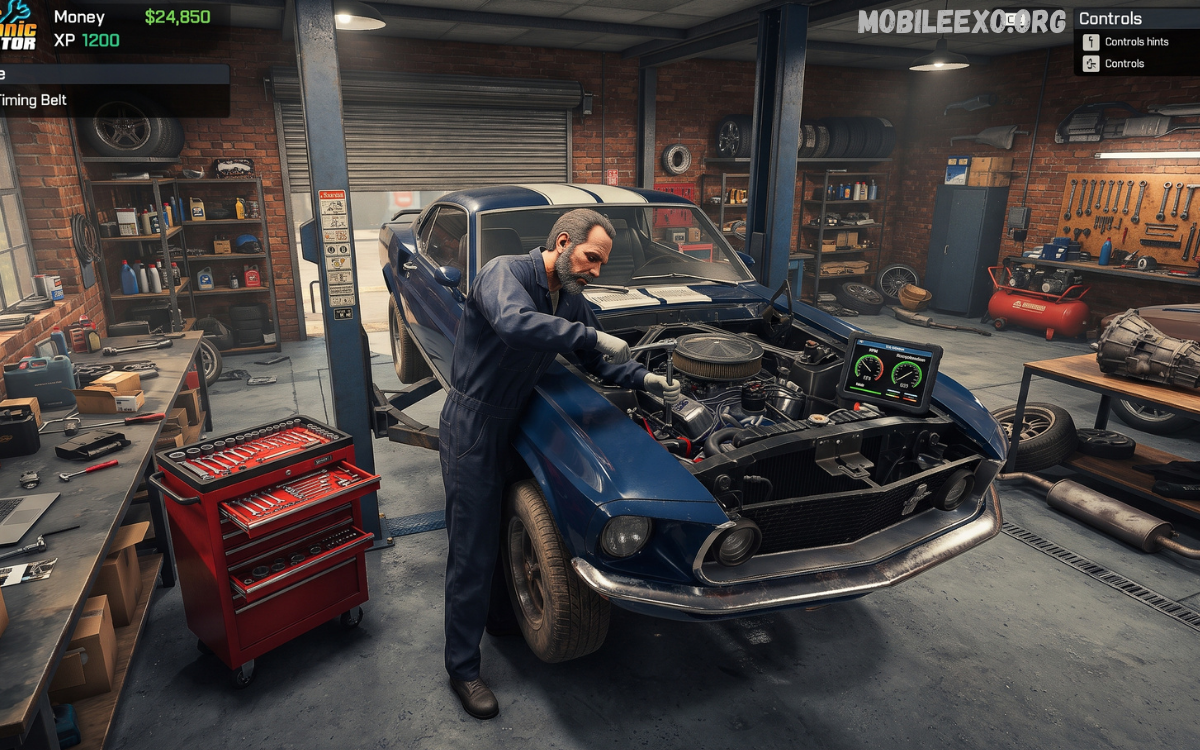
Car mechanic simulator games have become popular among players who enjoy automobiles, engineering, customization, restoration, and realistic gameplay. These games transform smartphones, PCs, and consoles into virtual garages where players can diagnose mechanical problems, replace components, repair engines, customize vehicles, and build successful automotive businesses.
Modern car mechanic simulator games offer much more than basic vehicle repair, combining realistic physics, detailed workshops, extensive vehicle customization, economic systems, and progression mechanics.
What Are Car Mechanic Simulator Games?
Car mechanic simulator games are simulation titles designed around vehicle maintenance, repair, restoration, customization, and workshop management. Instead of focusing entirely on racing, these games place players inside garages where mechanical knowledge, problem-solving, resource management, and attention to detail become important gameplay elements.
Players commonly perform tasks such as changing engines, replacing brakes, repairing suspension systems, installing exhaust components, fixing electrical systems, changing tires, painting body panels, and upgrading vehicle performance. Advanced titles can include hundreds of individual parts, making every repair project feel different.
Why Car Mechanic Simulator Games Are Popular
The biggest attraction comes from realistic automotive gameplay without requiring access to an actual workshop or expensive tools. Players can experiment with different vehicles, learn basic mechanical concepts, and enjoy the satisfaction of transforming damaged cars into functional or customized machines.
Another major advantage involves freedom and progression. Many car mechanic simulator games allow players to purchase vehicles, select repair projects, upgrade garage equipment, manage finances, and develop specialized workshops while gradually unlocking advanced tools and more challenging jobs.
Realistic Vehicle Repair Gameplay
Realistic repair mechanics create an immersive experience for automobile enthusiasts. Players may need to inspect components, identify damaged parts, remove old equipment, install replacements, and test vehicles before completing customer contracts.
Some advanced simulations divide vehicles into numerous individual components. Engines, transmissions, brakes, suspension systems, cooling systems, exhaust systems, steering components, electrical equipment, and body parts can require separate attention, creating a detailed mechanical experience.
Engine Repair and Upgrades
Engine work represents one of the most engaging features available in car mechanic simulator games. Players can disassemble engines, inspect components, replace damaged parts, rebuild assemblies, and improve performance through carefully selected upgrades.
Performance tuning can introduce another strategic layer to gameplay. Depending on the title, players may install improved intake systems, exhaust components, turbochargers, cooling equipment, engine parts, or other performance upgrades to create faster and more powerful vehicles.
Vehicle Restoration
Vehicle restoration provides a rewarding gameplay loop for players who enjoy classic cars and automotive history. A neglected vehicle can often be purchased cheaply, repaired gradually, repainted, upgraded, and transformed into a valuable finished project.
Restoration systems encourage patience because complete projects can require multiple stages. Players may repair mechanical systems first, restore bodywork later, replace interior components, and finally apply paint or customization before selling or displaying the completed vehicle.
Car Customization Features
Customization allows players to create unique vehicles according to personal preferences. Depending on the game, customization may include wheels, tires, paint, body components, suspension settings, exhaust systems, engine modifications, interior upgrades, and visual accessories.
Customization also gives players reasons to revisit completed vehicles. A restored car can become a performance build, showroom project, racing machine, or personalized street vehicle, allowing the same basic automobile to support several different gameplay approaches.
Garage Management
Garage management adds business simulation elements to car mechanic simulator games. Players may need to accept customer orders, purchase equipment, manage expenses, complete repairs efficiently, and reinvest profits into workshop improvements.
Upgrading the garage can unlock better tools, additional services, larger workspaces, advanced diagnostic equipment, and new repair opportunities. This progression system creates long-term objectives beyond individual vehicle projects.
Diagnostic and Problem-Solving Gameplay
Diagnosis separates mechanic simulations from simple vehicle customization games. Players must often determine which component has failed before purchasing replacement parts, creating a problem-solving experience based on observation and logical thinking.
Diagnostic systems can involve testing components, inspecting vehicle statistics, scanning electronic systems, checking mechanical assemblies, or identifying unusual symptoms. Successful diagnosis can reduce unnecessary expenses and improve workshop profitability.
Best Platforms for Car Mechanic Simulator Games
PC remains one of the strongest platforms for detailed mechanic simulations because computers can support complex interfaces, extensive vehicle models, realistic graphics, and large modification systems. Keyboard and mouse controls can also make inventory management and workshop navigation easier.
Consoles provide a more relaxed experience with controller-based gameplay and large-screen presentation. Mobile platforms offer convenient access for players who want shorter sessions, although the depth and graphical quality can vary significantly between different Android and iOS titles.
Car Mechanic Simulator Games for Android
Android has a growing selection of automotive simulation games designed for touchscreen devices. Many mobile titles focus on repairing engines, upgrading vehicles, managing garages, restoring cars, or combining mechanical gameplay with racing and driving challenges.
When choosing an Android mechanic simulator, players should consider graphics quality, control responsiveness, repair depth, vehicle variety, offline functionality, advertisements, in-app purchases, and device requirements. Games offering meaningful mechanical systems generally provide greater long-term value than titles relying primarily on repetitive tapping.
PC Car Mechanic Simulator Experiences
PC-based mechanic simulations generally provide deeper systems and larger vehicle libraries. Players can spend significant time inspecting components, rebuilding engines, restoring vehicles, managing workshops, and experimenting with performance modifications.
High-quality PC simulations can also benefit from community-created content when official or supported modification systems are available. Additional vehicles, parts, environments, and customization options can expand the experience and provide fresh projects after completing the original progression system.
Realistic Graphics and Physics
Graphics play an important role in creating an authentic automotive atmosphere. Detailed engines, vehicle interiors, workshop equipment, body panels, tools, and mechanical components can make repair activities feel more convincing.
Physics systems also influence the overall experience. Realistic vehicle behavior, suspension movement, acceleration, braking, handling, and component performance can make upgraded vehicles feel noticeably different from standard models.
Car Collection and Vehicle Variety
A diverse vehicle selection keeps mechanic simulation gameplay interesting. Sports cars, classic automobiles, compact vehicles, trucks, muscle cars, off-road vehicles, and other categories can provide different restoration and customization challenges.
Vehicle variety also encourages experimentation. Players may prefer restoring classic models, building high-performance cars, repairing everyday vehicles, or collecting unusual automobiles, depending on their individual interests.
Career Progression
Career systems provide structured objectives for players who enjoy long-term progression. Starting with basic repair contracts, players can gradually unlock more profitable jobs, advanced equipment, better facilities, and increasingly complicated vehicles.
Progression systems also create a sense of achievement. Completing difficult repairs, earning virtual currency, expanding a garage, and purchasing advanced equipment can turn a simple simulation into an extended management experience.
Multiplayer and Social Features
Some modern automotive games introduce multiplayer or social elements that allow players to compare vehicles, share customized builds, participate in challenges, or compete through automotive events. These features can make a mechanic-focused game more engaging for players who enjoy community interaction.
Social features are particularly useful when customization becomes a major part of gameplay. Players can showcase restored vehicles, compare performance builds, exchange design ideas, and discover different approaches to vehicle modification.
Learning Through Simulation
Car mechanic simulator games can introduce players to basic automotive concepts through interactive gameplay. Although simulations should not replace professional mechanical education, they can help players become familiar with component names, workshop procedures, vehicle systems, and general repair concepts.
Interactive learning can make complicated subjects easier to understand because players see relationships between components. Understanding how engines, brakes, suspension, cooling systems, transmissions, and electrical components contribute to vehicle operation can increase automotive awareness.
Read Also: Mechanic Simulator Games: Complete Guide to the Best Virtual Garage Experiences
Tips for Beginners
New players should begin with simple repair jobs before attempting complicated restoration projects. Learning the workshop interface, identifying common components, understanding diagnostic tools, and managing virtual finances can create a stronger foundation for later challenges.
Players should also avoid unnecessary spending during the early stages. Completing profitable contracts, upgrading essential equipment, and purchasing replacement parts strategically can accelerate progression while preventing financial problems inside the game.
Features to Look For
The best car mechanic simulator games usually combine detailed repair mechanics, vehicle customization, realistic graphics, varied contracts, garage progression, and satisfying restoration systems. A strong parts system can make every repair feel meaningful rather than turning maintenance into repetitive button presses.
Players should also evaluate control quality and user interface design. Clear menus, responsive controls, useful diagnostic information, organized inventories, and intuitive workshop layouts can make complex simulations significantly easier to enjoy.
Free vs Paid Mechanic Simulators
Free mechanic games can provide accessible entertainment without an upfront purchase. However, some free titles rely heavily on advertisements, energy systems, premium currencies, or restricted progression, so players should evaluate the overall experience rather than focusing only on the download price.
Paid simulations often provide deeper gameplay with fewer interruptions and broader feature sets. The best option depends on personal preferences, platform availability, desired realism, and willingness to invest in a more comprehensive automotive experience.
Future of Car Mechanic Simulator Games
The future of car mechanic simulator games could bring more advanced graphics, smarter diagnostic systems, expanded customization, improved physics, and greater vehicle variety. Improvements in mobile hardware and gaming technology may also allow increasingly detailed workshop experiences on smartphones and tablets.
Artificial intelligence and procedural systems could introduce more dynamic customer requests, realistic vehicle problems, and personalized repair scenarios. Virtual and augmented reality technologies may also create more immersive garage environments as hardware becomes increasingly accessible.
Frequently Asked Questions
What are car mechanic simulator games?
Car mechanic simulator games are simulation titles that let players repair, restore, customize, upgrade, and manage virtual vehicles in a digital workshop.
Are car mechanic simulator games realistic?
Many modern games offer realistic vehicle components, diagnostic systems, repair procedures, workshop tools, and customization features. The level of realism varies by game.
Can I play car mechanic simulator games on Android?
Yes. Several Android games focus on vehicle repair, restoration, customization, and garage management. Features and realism differ between individual titles.
Are car mechanic simulator games suitable for beginners?
Yes. Most games provide tutorials, simple repair jobs, and progressive difficulty, allowing beginners to learn the basic mechanics before handling complex projects.
Can I customize cars in mechanic simulator games?
Many titles include extensive customization options such as wheels, tires, paint, body components, engine upgrades, suspension modifications, and performance parts.
Do car mechanic simulator games include engine repairs?
Yes. Engine repair is a major feature in many mechanic simulations. Players can inspect, remove, replace, rebuild, and upgrade various engine components.
Can I restore classic cars?
Yes. Restoration-focused games allow players to purchase damaged or neglected vehicles, repair mechanical components, improve bodywork, customize interiors, and create finished collector vehicles.
Are car mechanic simulator games educational?
They can introduce basic automotive concepts and component names through interactive gameplay. However, they should not replace professional automotive training or hands-on mechanical education.
Which platform is best for car mechanic simulator games?
PC generally offers the deepest simulation experiences, while consoles provide convenient controller-based gameplay. Mobile devices are useful for players who prefer portable gaming sessions.
What makes a good car mechanic simulator game?
A strong title typically combines realistic repairs, detailed vehicles, customization, useful diagnostic systems, garage progression, varied jobs, smooth controls, and engaging long-term gameplay.
Conclusion
Car mechanic simulator games offer an engaging combination of automotive repair, customization, restoration, problem-solving, and business management. Their appeal comes from giving players control over virtual workshops where damaged vehicles can become restored classics, customized street cars, or high-performance machines.
Whether played on PC, console, or mobile devices, these simulations provide numerous ways to explore automotive mechanics without requiring a physical garage. With realistic repair systems, extensive customization, career progression, and diverse vehicle collections, car mechanic simulator games remain an excellent choice for players who enjoy cars and detailed simulation gameplay.

1 Comment
Pingback: Police Simulator Games: Best Realistic Police Games to Play in 2026 - Mobileexo